Indonesia’s South Sea pearls are enjoying robust international demand, despite market uncertainties stemming from supply constraints along with global macroeconomic and geopolitical tensions.
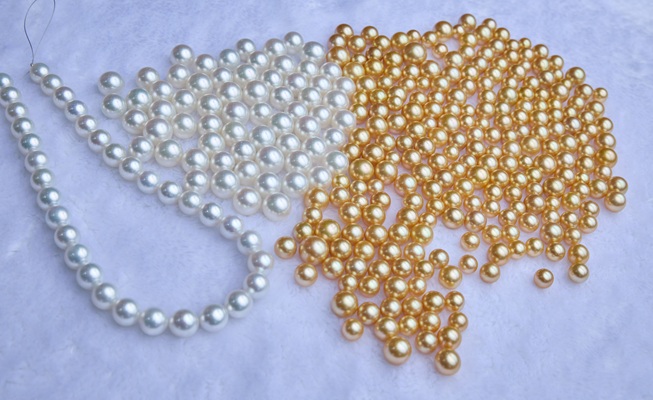
PT Rosario Mutiara CV operates three pearl farms in Indonesia, producing both golden and white South Sea pearls.
According to Vice President Yustinus Mario Tenggara, some 80 per cent of its production in recent years has been snapped up by buyers from mainland China, many of whom head directly to the company’s farms to purchase its harvests. Demand is such that even lower-grade pearls that were once disposed of now have a value, he added.
"Demand for AAA quality pearls has been absurdly strong. Silver white and cold white pearls are the best sellers; even those of lower quality still command top dollar," Tenggara revealed.
Prices of cream and off-white pearls are also good since these can be treated or enhanced, he continued. Keshi pearls though are the big winners as their price has quadrupled since pre-pandemic times.
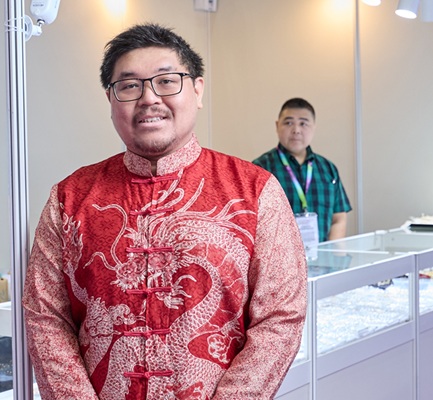
PT Rosario Mutiara CV Vice President Yustinus Mario Tenggara
Golden Indonesian South Sea pearls are likewise highly favoured due to their relative scarcity in the market. Tenggara said, "Since white pearls were the trend for the past few years, almost all pearl farmers in Indonesia switched their production to white pearls. This caused a shortage of golden South Sea pearls, putting upward pressure on prices."
Jakarta-based pearl dealer PT Inlove Jewelry specialises in South Sea pearls. Indonesian South Sea pearls comprise most of its inventory, but the company also carries stock from Australia, Myanmar and the Philippines.
Company owner Joy Lee attested to the popularity of Indonesian South Sea pearls as well as the challenge of obtaining more high-quality golden pearls from local farmers. “Indonesian golden South Sea pearls are lighter in colour than Philippines ones, but there is a solid market for these lighter varieties,” she said. “I foresee an eventual shortage of these since many farmers converted their production to white pearls.”
Working to the advantage of Indonesia’s pearl trade is the continued expansion of the market, with growing acceptance of different kinds of pearls.
According to Tenggara, Chinese buyers used to only purchase best-quality perfectly round pearls, avoiding keshis and baroques. "Nowadays, the Chinese market buys all types of pearls in all qualities. Their purchasing power and activity have a tendency to push prices up and create value for wider varieties of goods," he explained.
For instance, commercial-quality South Sea pearls from Indonesia used to be dominated by Indian buyers but are now favoured too by customers from China and the US, Tenggara disclosed.
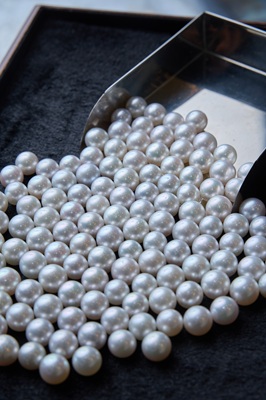
Indonesian South Sea pearls from PT Rosario Mutiara CV
Price and supply
Supply challenges are putting further pressure on prices. According to Tenggara, most of the bigger Indonesian pearl farms are selling pre-pandemic stock. Since pandemic work restrictions in Indonesia were only lifted in end-2022, pearl farms resumed operations in mid-2023, with harvests scheduled for 2027.
Smaller pearl farms in remote islands may have undertaken seeding and harvest procedures post-pandemic, but quantities are not sufficient for export, he added.
"Before Covid-19, Indonesia generally produced 5 million to 7 million South Sea pearls annually. This figure is now down to 1.5 million to 2 million at the most," said Tenggara.
A further indication of market consolidation is provided by membership numbers of the Indonesia Pearl Culture Association – 17 active players, compared to its peak of 400 farmers at the height of regular business, he continued.
"As a pearl farmer, the situation works to our advantage. Prices have strengthened due to the scarcity of supply, and international demand has been strong," said Tenggara. "China’s appetite for Indonesian South Sea pearls is even bigger than that of Hong Kong and Japan, as observed at a July 2025 auction."
Distinctive appeal
For Tenggara, Indonesia’s competitive edge over other pearl producers lies in the quantity, quality and diversity of its production.
"Indonesian South Sea pearls are not chemically treated to enhance their colour and lustre. Some buyers, especially collectors, prefer this," he shared.
For Lee though, it all boils down to price. Indonesian South Sea pearls offer better margins, with comparable quality at more competitive prices due to lower labour and production costs.
She explained, “Indonesian pearls may cost 10 to 15 per cent less than Australian pearls. They are at par quality-wise, but Australian farms will get a greater percentage of good-quality pearls since their technology and farming processes may be superior.”
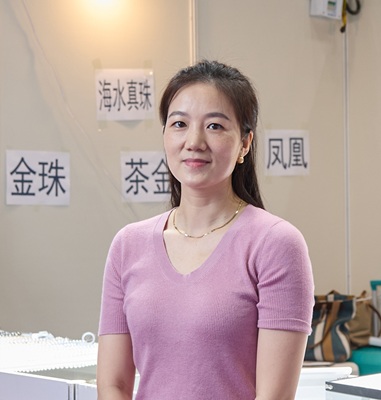
PT Inlove Jewelry Owner Joy Lee
The country’s pearl industry is however not immune from challenges, most of which come from nature. Tenggara cites the impact of climate change in the form of longer rainy seasons, unusual weather disturbances, sudden temperature fluctuations, water quality and the like can wreak havoc on production.
Tenggara said, “All in all, the future is bright. Right now, the opportunities are in Asia. It is however wise to remain prudent given current geopolitical tensions.”