Southeast Asian jewellers continue to establish strategic alliances, initiate reforms and build pathways for collaboration in the hope of one day achieving regional and economic integration.
This article first appeared in the JNA November/December 2025 issue.
Sustained efforts are driving the ASEAN Gems & Jewellery Trade Association’s (AGJA) years-long vision for a unified jewellery trading bloc, equipped with unparalleled expertise in jewellery design, manufacturing and exports as well as gemstone production.
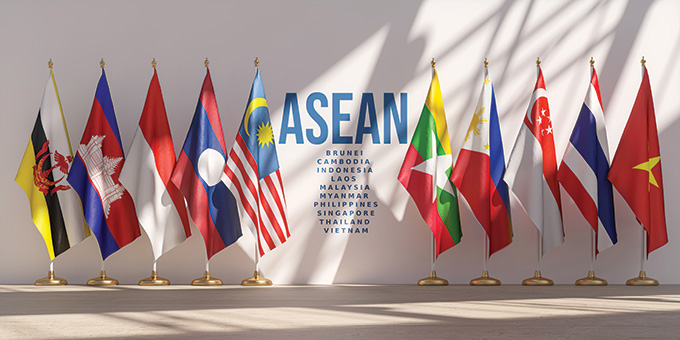
ASEAN, which stands for the Association of Southeast Asian Nations, consists of Brunei, Cambodia, Indonesia, Laos, Malaysia, Myanmar, the Philippines, Singapore, Thailand and Vietnam.
Established in 2018, AGJA has a compelling and purpose-driven mandate: To foster seamless jewellery and gemstone trade in the region through a unified tax system, among other proposals; provide a platform for knowledge-sharing and technological development; and further build ASEAN jewellers’ OEM/ODM expertise.
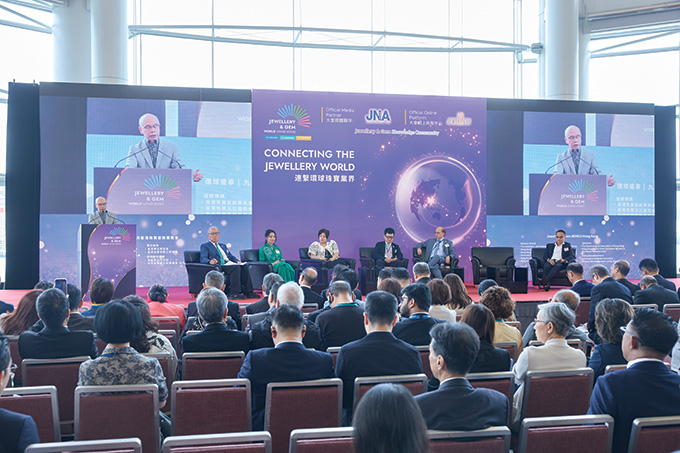
Fast-forward to 2025, industry stakeholders are keeping the flame alive with fresh initiatives and partnerships. Speaking at the 2025 AGJA Conference held in September on the sidelines of Jewellery & Gem WORLD Hong Kong 2025, AGJA President Suttipong Damrongsakul said the association is not merely an industry body but a bridge that connects ASEAN with the rest of the world.
“With more than 150 members spanning jewellery manufacturing, retail and international distributions, our mission is clear: Strengthen multisectoral cooperation, champion sustainability and free trade, and ensure that ASEAN is recognised not as a fragmented market but a united force in the global jewellery trade," he remarked.
The 2025 AGJA Conference was jointly organised by AGJA and the Hong Kong Jewellery & Jade Manufacturers Association (HKJJA).
Strong collaborations
A major strategy is forging strategic partnerships to bolster ASEAN’s network, expand access to new markets and eventually break down regional barriers. Working with key trading partners like Hong Kong, for instance, is a step towards this direction.
Damrongsakul explained that Southeast Asian jewellers can benefit from Hong Kong’s free trade status, proximity to mainland China and expertise in jewellery design, branding and retail. ASEAN, meanwhile, offers a dynamic gem and jewellery manufacturing base, abundant natural resources and skilled craftsmanship.
“Together, we create a powerful synergy,” he noted, adding that a rising number of Hong Kong manufacturers are already expanding their operations in Thailand.
Hong Kong Deputy Financial Secretary Wong Wai Lun agreed, noting that trade between Hong Kong and ASEAN is growing from strength to strength.
ASEAN is Hong Kong’s second-largest trading partner, with bilateral trade recording an annual average growth rate of 5.7 per cent. In 2024, total merchandise trade reached US$165 billion, and jewellery and other related products ranked second in Hong Kong’s domestic export commodities to ASEAN.
The Mainland and Hong Kong Closer Economic Partnership Agreement signed in 2003, meanwhile, grants tariff-free access to Hong Kong goods, jewellery included, entering China.
“ASEAN jewellers can consider setting up manufacturing facilities in Hong Kong or cooperating with Hong Kong producers to create designs for a mainland audience or overseas markets,” he added.
For his part, HKJJA Chairman Victor Chan said ASEAN presents a sea of opportunities for Hong Kong jewellers. ASEAN has a combined population of around 700 million. It also brings to the table a younger and energetic workforce.
Exploring new markets has likewise become more critical as higher US tariffs continue to disrupt global businesses, including the jewellery trade.
Chan explained, “The US tariff hikes remind us of the risks associated with over-reliance on a single nation. However, within every challenge lies opportunity. This is our moment to diversify into Europe, the Middle East and ASEAN. It is time to strengthen our regional supply chains and invest in innovation.”
Within ASEAN, collaborations targeted towards expertise-building are also vital. Le Yen, vice president of the Vietnam Gemstone Jewelry & Art Crafts Association, highlighted Vietnam’s rich natural resources of coloured gemstones. Beyond that however, there is a need to develop the country’s infrastructure and logistics as well as technology, specifically blockchain and AI capabilities.
Its gemstone cutting and polishing industry is also underdeveloped, compared to more advanced counterparts such as Thailand.
The Philippines, for its part, offers fresh opportunities for joint ventures. Mia Florencio, vice chairman of AGJA's ASEAN International Committee and past president of the Guild of Philippine Jewellers Inc, explained that majority of the jewellery products manufactured in the Philippines are sold locally, which means there is untapped potential in the export market.
“Come to the Philippines and sell your products or do joint ventures with Philippine jewellers. The country is home to more than 100 million people and that is a big market,” she continued.
Onwards to the future
Hurdles to regional integration, specifically fragmented, country-specific standards, persist, according to Charles Ho Nai Chuen, president of the Singapore Jewellers Association (SJA). Inconsistent certification and hallmarking processes across borders coupled with varying product disclosure requirements create trade barriers and consumer confusion, he added.
The solution is to harmonise regional trade practices. The SJA, for instance, is eyeing the creation of a mutual recognition agreement among ASEAN members.
“In this way, we can align critical areas and establish common benchmarking criteria, like for gold purity, for instance,” explained Ho. Gemmological certification can also be standardised while member countries can come up with unified disclosure frameworks.
With its modernised logistics, advanced digital trade platforms and established industry best practices, Singapore is well positioned to support ASEAN in accelerating integration, he added.
“Achieving this calls for regulatory alignment through a mutual recognition agreement, harmonised frameworks and adoption of shared industry benchmarks that facilitate seamless trade and uphold quality standards across the region,” remarked Ho.