The Gem and Jewelry Institute of Thailand (Public Organization) is reinforcing the country’s position as a leading sustainable gem and jewellery hub through advanced testing, digital traceability and new due diligence standards.
This article first appeared in GEMSWORLD 2026.
Thailand’s gem and jewellery sector, long recognised as a powerhouse for coloured stones, is entering a new era of traceability. At the forefront of this transformation is The Gem and Jewelry Institute of Thailand (Public Organization) or GIT, which is enhancing gemstone provenance and responsible business practices across the supply chain.
“Provenance and traceability are no longer niche concerns confined to the luxury segment,” said Sumed Prasongpongchai, director general of GIT. “They have become fundamental to consumer trust, market access and long-term competitiveness.”
Growing demand for traceability
In recent years, GIT has seen an expanding spectrum of gemstones submitted for analysis.
Rubies, sapphires, emeralds, fancy colour sapphires and jade continue to dominate, while there has been an uptick in client submissions of high-value spinels, garnets and Paraiba tourmalines.
“Demand for identification, treatment detection and origin opinions on these stones has grown in parallel with market prices and consumer awareness,” said Prasongpongchai.
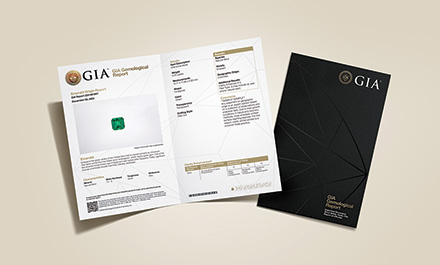
GIT’s streamlined mini report, designed for everyday trading, has become its most widely used service due to its efficiency, cost-effectiveness, reliability and clear disclosures. Its full laboratory report with origin opinions, meanwhile, is highly sought after for top-quality gemstones, where provenance is key to market positioning.
“The surge in these requests underscores that traceability and independent documentation are now regarded as fundamental requirements for accessing higher-end segments of the market,” Prasongpongchai remarked.
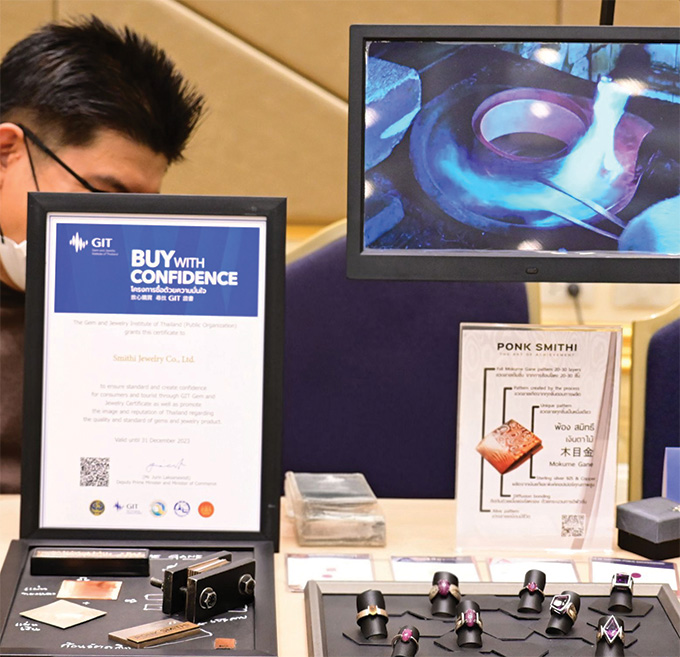
Central to GIT’s mission is the “Buy With Confidence” (BWC) project launched in 2018 to protect consumers and build trust in Thailand’s gem and jewellery industry.
Each certified item under the BWC project comes with a GIT Gem and Jewelry Identification Report and a QR Code that allows consumers to instantly verify the authenticity of their purchases. In the fiscal year 2024, GIT issued more than 14,500 reports.
Addressing new treatment challenges
Alongside identification and origin services, GIT is witnessing rising demand for testing related to treatment disclosure. Advanced analyses now focus on detecting heat treatment, lattice diffusion, clarity enhancement in corundum and detailed characterisation of impregnation and filling in other coloured stones.
GIT’s research teams continuously track emerging treatments through global collaborations and participation in international gemmological conferences. Of particular concern are low-temperature and multi-step diffusion treatments that may evade standard detection methods.
“The long-term stability of colour in treated gemstones, particularly where new or complex treatment routes are used, is a recurring question from our clients,” Prasongpongchai explained. “Effective communication of the gems’ nature, stability and implications in a way that supports transparent trade and protects consumer confidence is essential. Our role is to provide science-based guidance to our clients.”
GIT's gem testing protocols are aligned with international standards, including ISO/IEC 17025, the World Jewellery Confederation (CIBJO) and the Laboratory Manual Harmonisation Committee (LMHC).
Responsible and traceable supply chain
GIT is also taking a holistic approach to responsible sourcing under its “Thailand Towards a World Sustainable Gem and Jewelry Hub” initiative. In 2025, it made significant strides in implementing global Environmental, Social, Governance (ESG) standards in the Thai gem and jewellery industry.
“One of our major achievements has been the adoption of the Responsible Jewellery Council’s Code of Practices,” said Prasongpongchai. “This has elevated Thai small and medium-sized enterprises in the coloured stone and jewellery manufacturing sectors to align with international ethical standards.”
GIT also introduced practical tools such as Carbon Footprint for Organization (CFO) assessments to help manufacturers measure and mitigate environmental impacts.
This year, the institute plans to roll out the GIT Due Diligence Standard (GIT-3001) as a national benchmark for jewellery supply chains, reinforcing Thailand’s commitment to integrity.
“Our vision is that every coloured stone processed in Thailand can be traced – from cutting centres in Chanthaburi to export destinations – backed by verifiable credentials of sustainability and transparency while showcasing exceptional Thai craftsmanship,” said Prasongpongchai.