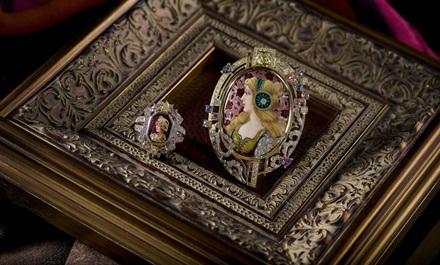
One-of-a-kind creations and inventive designs took centre stage at the Japan Jewellery Fair 2025, as industry players emphasised quality and artistry amid challenging market conditions.
This article first appeared in the JNA November/December 2025 issue.
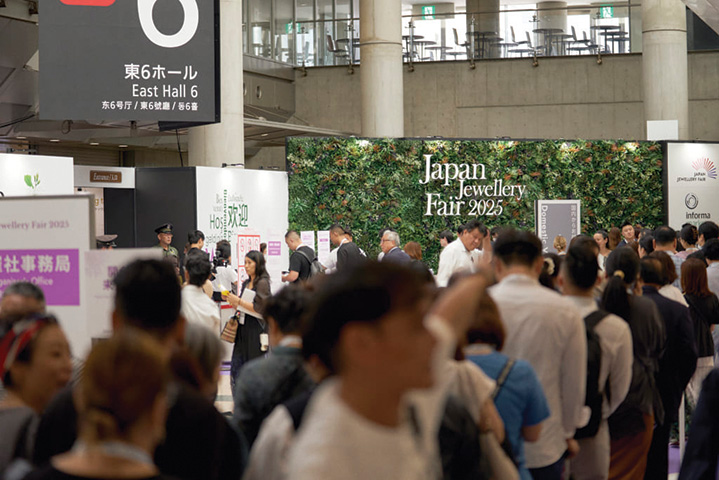
The Japan Jewellery Fair (JJF), Japan’s largest B2B jewellery exhibition, underscored the innovative spirit and exquisite craftsmanship of Japanese jewellers. Organised by Informa Markets in partnership with the Japan Jewellery Association (JJA), the fair was held in Tokyo from August 27 to 29, 2025 and featured 371 local and foreign exhibitors.
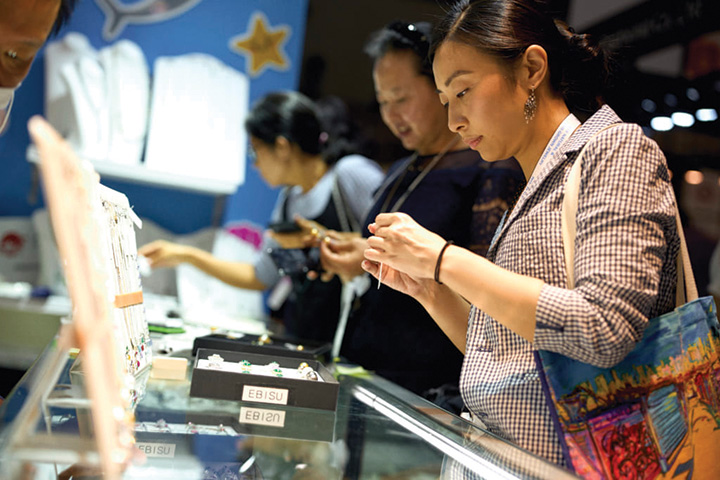
Fair visitors reached 14,369, up around 17 per cent from 2024, signalling improved market sentiment amid economic uncertainties. Exhibitors told JNA they entertained buyers mainly from Japan, China and Southeast Asia.
Despite increased footfall, exhibitors said broader market challenges still affected the business. Chikara Yanagimoto, president of Create Takano Co Ltd and chairman of the Yamanashi Jewelry Association, cited challenges such as soaring gold prices, rising raw material costs and a sluggish Chinese economy. Inflation and currency fluctuations also weighed on local consumption appetite.
“Younger buyers are more cautious due to the high cost of living, which dampened their desire for luxury purchase,” said Yanagimoto. “However, demand from affluent Japanese consumers remains stable. They favour high-end jewellery with unique designs, superior quality and investment value.”
As such, many Japanese jewellers are focusing on quality and exclusivity to attract discerning buyers while seeking international opportunities.
Key trends
The allure of Japan-made jewellery continues to captivate global and domestic markets. Yanagimoto observed a growing preference for yellow gold jewellery, which dominated about 80 per cent of demand. For instance, Create Takano saw stable sales of 18-karat gold diamond earrings and necklaces as well as soaring interest in plain gold jewellery. In response, the company is expanding its offerings of 18- and 24-karat gold pieces, which were offered at the show.
Meanwhile, Japanese coloured gemstone jeweller Kajita Co Ltd reported robust demand for high-quality coloured gemstones, particularly fancy sapphires.
“We met many serious buyers mainly from Japan and China who showed keen interest in premium gems. Our new butterfly-inspired coloured gemstone jewellery line, Papillon, was also well-received,” shared Kajita President Kengo Kajita.
Joji Yoda, sales division director of Ishitomo Co Ltd, attested to the solid performance of Japan-made jewellery. The company showcased a collection of rings adorned with round morganites, peridots and citrines, among other gems.
Yoda explained, “When it comes to coloured gem solitaires, oval cuts are more common than rounds as the latter typically result in more material wastage during the cutting process. At JJF, we presented a line of round coloured gems to entice buyers. Our designs are intricate and competitively priced.”
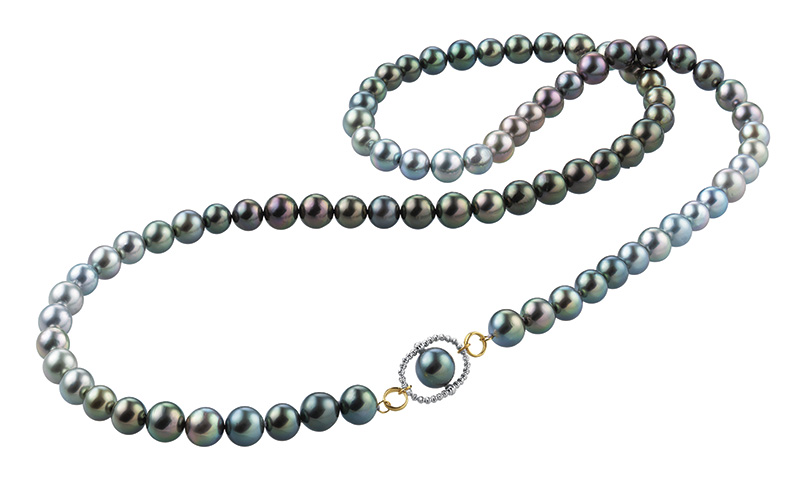
Uto Shinju Co Ltd, for its part, introduced new pearl jewellery designs, including a Tahitian pearl necklace featuring subtle colour gradations. Known for its expertise in saltwater pearl jewellery, the company primarily caters to Japan and China.
“This year, our design concept features a sophisticated fusion of materials such as Tahitian and South Sea pearls. We aim to create special and unconventional pieces that resonate with our clientele,” said Akane Tanaka, the company’s chief of Domestic Sales. “Buyers are more cautious. They would check out products and return the following day to place orders.”
Rarity shines
One-of-a-kind jewellery was the star of JJF 2025. Eiko Watch Co Ltd showcased fine jewellery by renowned designers Koji Iwakura, Minato Nakamura, Morio Funakushi and Sekine Masafumi.
Kenji Ueno, general manager of Eiko Watch’s Osaka branch, emphasised the market's growing affinity for distinctive statement jewellery pieces, particularly among Chinese buyers.
“Unique artisanal pieces with rich stories and meanings are highly sought after as opposed to ordinary jewellery and mass-produced pieces,” said Ueno. The company wants to enhance recognition of Japanese craftsmanship locally and in overseas markets.
Nobuko Ishikawa Co Ltd, founded by celebrated jewellery designer Nobuko Ishikawa in the 1970s, made its maiden appearance at JJF 2025.
The brand is known for its Nobuko Premier Art Collection featuring bespoke pieces inspired by myths, tales and the history of civilisations around the world. It also offers the Haute Couture High Jewellery Collection and the Ishikawa Boutique Line.
“We primarily serve the Japanese market but our goal is to meet overseas partners to expand our sales channels beyond Japan,” said CEO Yukihiko Kai. “We engaged with buyers from China and Southeast Asia.”
Kai also said the polarisation between premium jewellery and low-priced fashion accessories is growing domestically. To address this, the company launched a new collection targeting younger customers. “The pieces feature silver chains accented with 18-karat gold, maintaining high quality while balancing affordability, as starter pieces for young buyers,” Kai added.
Unique artistry
Innovative jewellery that blends tradition and modernity garnered attention at JJF. Jewellery designer Tatsuji Ikeda, winner of the 1982 Diamond International Awards, showcased his Japonism Collection that melds Japanese aesthetics with contemporary design. “Coloured gems are turning heads at the fair. An 18-karat yellow gold ring adorned with green garnet was one of our standout pieces,” he remarked.
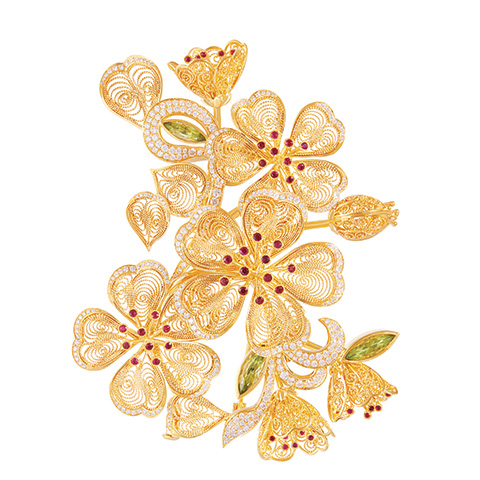
Hong Kong-based Sonja T. Jewellery, meanwhile, presented fine jewellery crafted using traditional Chinese filigree inlay techniques. The brand unveiled two Japan-exclusive brooches at JJF. Co-founder Sonja Chan cited the cultural significance of the brooches, inspired by the crane and the Sakura, symbolising beauty and hope in both Chinese and Japanese cultures.
“Every piece is a masterwork, meticulously handcrafted from 18-karat gold wire as fine as a strand of hair (0.07mm),” said Chan. “These are more than just jewellery as they embody the essence of history and culture transformed into modern wearable art.”
Outlook
Latest JJA data revealed that Japan’s jewellery exports fell by 40.7 per cent to 161.1 billion yen (around US$1.06 billion) in 2024. Exports of all jewellery categories were generally down, except for diamond jewellery, which rose 29.2 per cent. Jewellery imports, meanwhile, were up 16 per cent.
JJA chairman Keita Nagahori attributed the decline in exports to economic headwinds in China, leading to subdued demand for pearl jewellery. Stronger imports, meanwhile, was due to rising costs of raw materials and yen depreciation.
Nagahori said risks persist due to macroeconomic uncertainties such as US tariffs, prompting caution among Japanese companies.
JJA continues to support the industry through initiatives such as the Bridal Diamond Pavilion at JJF to reignite interest in jewellery among younger consumers; and the Japan Brand Pavilion at the Jewellery & Gem WORLD Hong Kong (JGW) 2025 to promote Japanese jewellery brands to international markets.
“The perception of Japanese jewellery has long been tied to pearls and pre-owned pieces. However, it goes beyond that. Japan has diverse designer brands and companies with unique production techniques,” Nagahori explained. “Japanese jewellers should highlight their dedication to design and their fundamental strength: exquisite
Japanese craftsmanship.”