Exhibitors cite surging gold prices, US tariffs and macro challenges as factors affecting business at the recently concluded fair in Istanbul, Turkey.
This article first appeared in the JNA November/December 2025 issue.
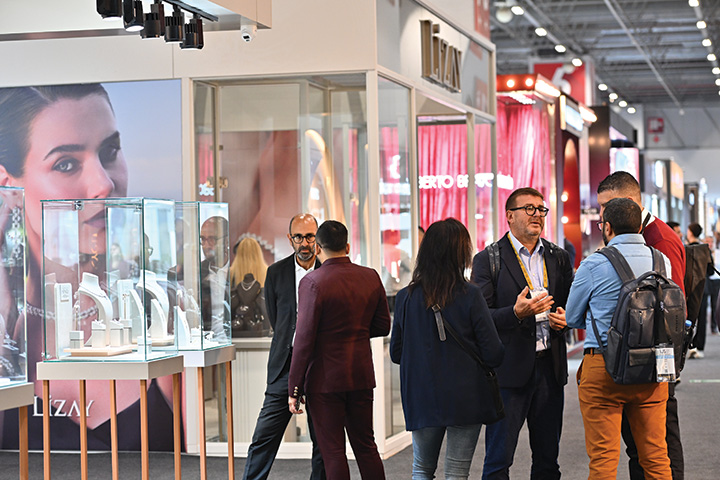
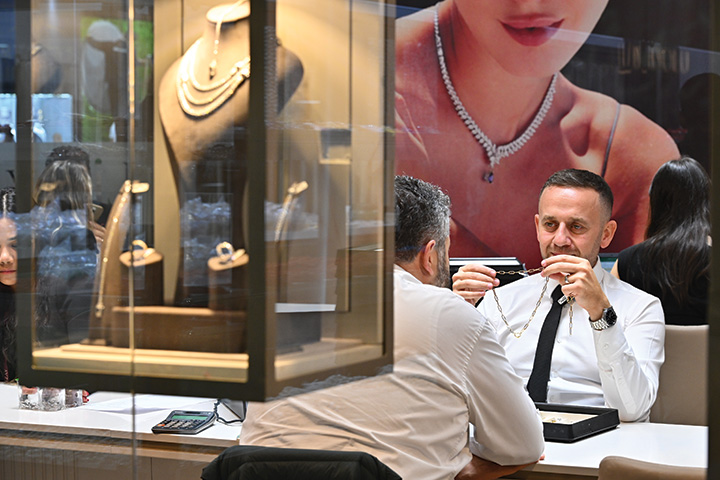
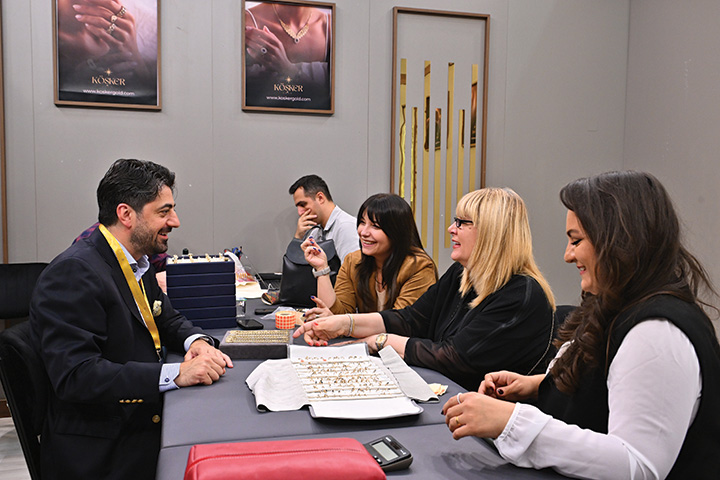
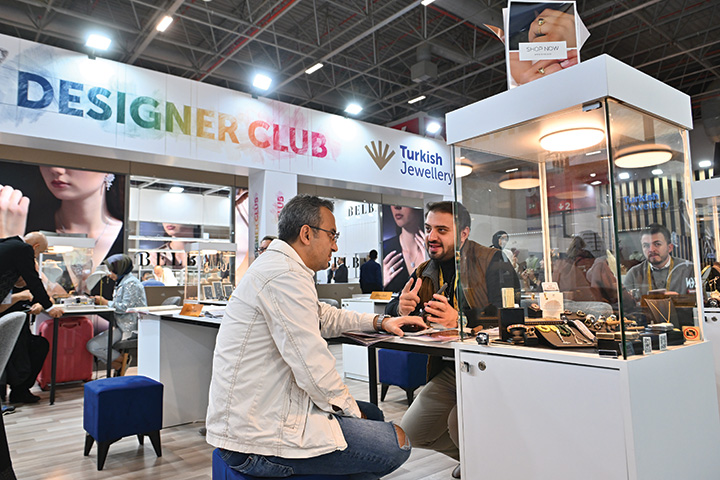
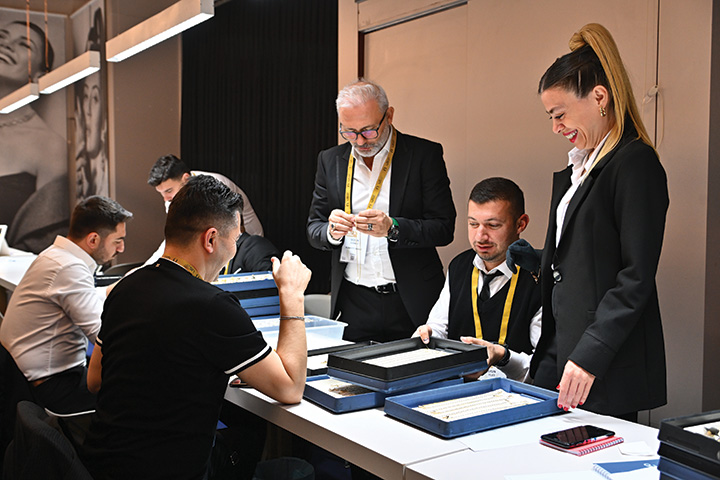
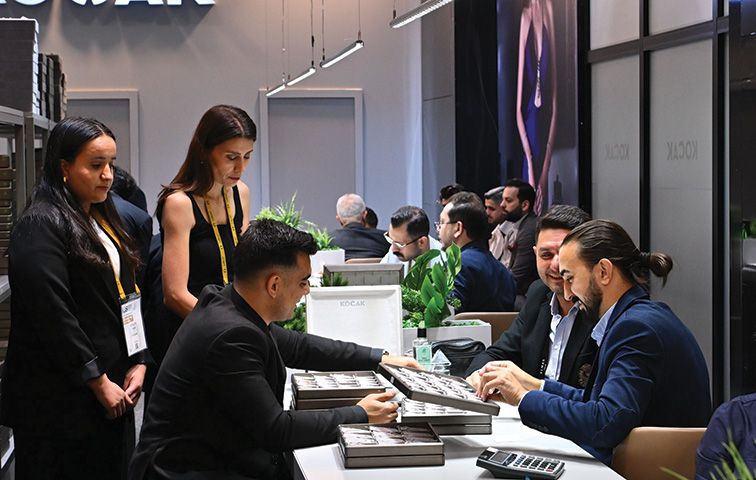
The impact of high gold prices coupled with ongoing economic and political uncertainties became more pronounced at the October 2025 edition of the Istanbul Jewelry Show (IJS), with exhibitors citing a steady but moderate flow of trade buyers alongside discernible changes in market preferences.
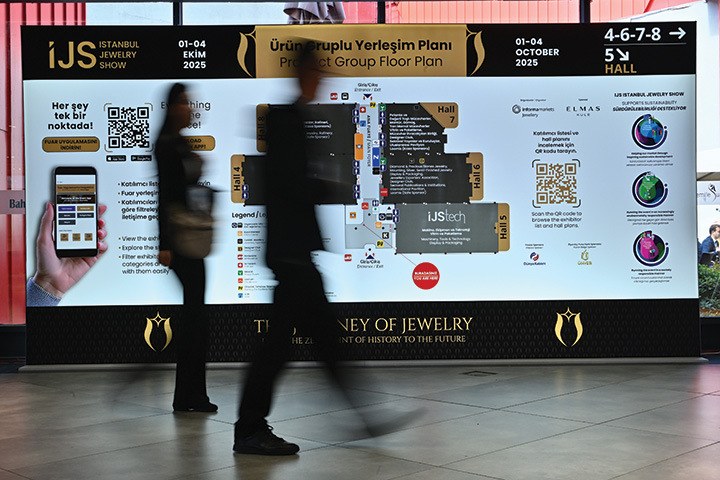
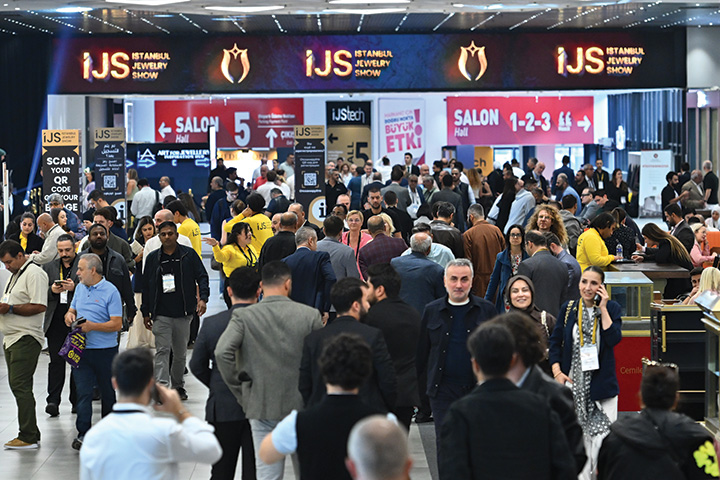
Organised by Informa Markets, the fair brought together nearly 1,000 jewellery companies and brands from 15 countries and 18,683 visitors from 131 countries. It was held from October 1 to 4 at the Istanbul Expo Center.
Beyond Türkiye, countries with the highest number of visitors included Iran, Egypt, Lebanon, Saudi Arabia, the United Arab Emirates (UAE), Algeria, Iraq, India, Uzbekistan, Russia, the US, Azerbaijan, Tunisia, Romania, Jordan, the United Kingdom, Germany, Greece, Libya and Bulgaria.
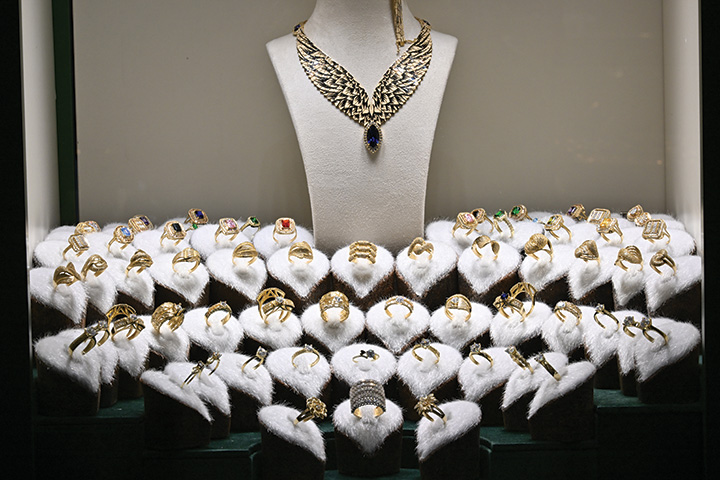
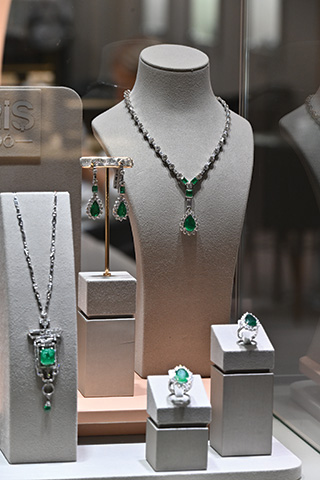
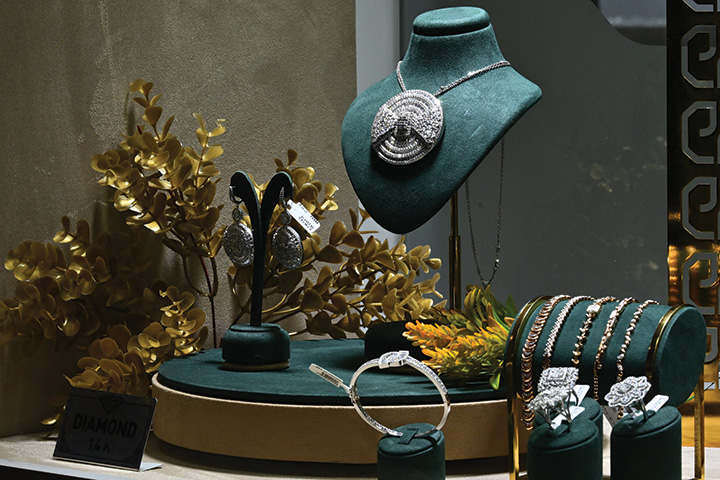
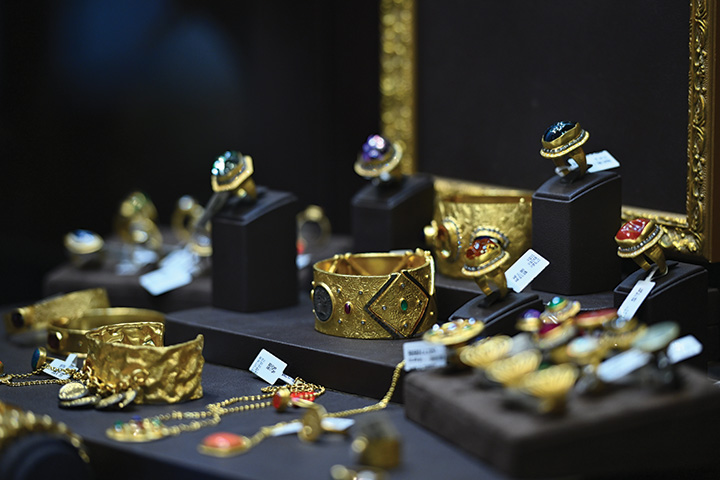
Gold sets and diamond jewellery were among the show’s highlights, according to the organiser. Şermin Cengiz, co-founder of IJS, said the show is critical to bolstering Türkiye’s export potential. Citing industry data, she said the Turkish jewellery sector reached US$7.48 billion in exports in 2024.
A changing market
Atabek Sultanov, export manager of Goldenline Jewellery, said IJS traditionally attracts buyers from the Middle East as well as Europe and Russia – before the unprecedented jump in gold prices. And with pricier gold, customers are gravitating towards lightweight jewellery items.
“Now, we see very few customers from the Middle East, particularly from Saudi Arabia, Algeria, Lebanon, the UAE and Iran,” shared Sultanov. “The volume of orders was down around 30 to 40 per cent compared to the previous edition.”
Turkey’s imposition of an additional 20 per cent duty on precious metal imports is also affecting customers’ purchasing decisions.
Shaun Gioele Gori, sales manager at Graziella Braccialini, said the brand developed a new line of ultra-lightweight jewellery using its new proprietary Graziella technology. These are performing well in North African markets. The company used to make statement pieces and bigger collections, but the market has since shifted, with buyers increasingly opting for smaller and lighter pieces, he added.
“Gold costs three times more now compared to four or five years ago, so it makes sense to buy something lightweight, and for us, to make something lightweight,” shared Gori. “We previously sold more 18-karat gold pieces. Now, 14-karat gold jewellery is moving faster.”
Gori said he met buyers from Eastern Europe, specifically Bosnia and Macedonia, as well as Iran, North Africa and Libya, at IJS October.
For her part, Gizem Karışık, export manager of Simoro Jewellery, said her company entertained new buyers from Türkiye, Mexico and Romania. Customers were mostly interested in gold jewellery with diamonds while others preferred gold with zircon, she added.
Simoro Jewellery offered its Tarot and Elements Collections, which were well-received at the four-day fair.
Kerem Kurtulan, general manager of Kurtulan, meanwhile, met buyers from the Middle East and Italy. He explained though that IJS October used to have a more global feel – with the company doing business with buyers from Mexico, the US, Hong Kong and China.
Kurtulan launched new collections at the fair, which Kerem described as more durable and competitively priced to align with existing market trends. “I still produce solid gold pieces but my gold fusion items, which are a novelty, performed strongly at this show,” he explained.
Gold and tariffs
High gold prices are affecting newer customers more than existing ones, added Kerem. “Old customers know my brand but those new to the business are more hesitant to invest and intimidated by gold prices. I still think there is potential though,” he noted.
A 15 per cent US tariff on Turkish products, jewellery included, is also a deterrent. Kurtulan’s clients, however, are willing to shoulder the extra fees, added Kerem.
Fadi Imseeh, owner of Imseeh Jewelry, revealed that business likely declined by 20 per cent this year compared to the fair’s 2024 edition mainly due to gold prices and the resulting market instability.
Echoing other exhibitors’ sentiments, he said customers are more inclined to buy plain and lightweight jewellery pieces due to the surging gold price but also because these are trendier and more stylish.
US tariffs, meanwhile, could be the main reason why there were fewer American buyers at IJS October 2025, he noted. The company met customers mostly from the Middle East, Egypt, Lebanon, Palestine, Algeria as well as the US and Australia. There were also new customers from Dubai, Saudi Arabia and Kuwait.
Future
Gori of Graziella said the jewellery trade is waiting to see how the industry will respond to continued challenges, including gold prices, taxes and tariffs, and political upheavals. The US market increasingly adopting a more protectionist policy is likewise having a massive impact on global businesses.
Changes in demand and product preferences will also continue, he added. “Eventually, manufacturers will switch to lower karats because that is what buyers can afford. There will still be demand for jewellery, but if people are getting married and 18-karat gold is too costly, they will opt for 14-karat or even 10-, 9-karat gold.”
For his part, Kerem explained that slower business in 2025 was within expectations due to ongoing macro uncertainties, including the Russia-Ukraine and Israel-Palestine wars as well as US tariffs and gold prices.
“However, we are not at a point where we are giving up and we are at our wits’ end. We are still making money, so it is all good, although business was not as robust as two, three years ago,” he remarked. “It is slower, and this could continue next year, with potential for more stability in 2027. I remain hopeful.”