Innovations in pearl cultivation combined with strategic initiatives and compelling narratives are placing high-quality freshwater pearls in the limelight. These developments alongside global expansion are paving the path for China’s freshwater pearl industry.
This article first appeared in Pearl Report 2025-2026.
China’s pearl industry experienced a slowdown in 2024, following an extraordinary boom in 2023. According to the 2024 China Jewellery Industry Development Report by the Gems and Jewelry Trade Association of China, pearl jewellery sales in China decreased by 40 per cent year on year to RMB21 billion (around US$2.9 billion) in 2024, accounting for around 3 per cent of the country’s total jewellery sales.
Industry players attributed this downturn to global economic headwinds and cautious consumption sentiment, which they also described as a “natural cycle.” The market has since steadily recovered through the first half of 2025.
“From 2023 to the first half of 2025, pearl prices were like a roller coaster ride,” said He Bin, vice chairman of the Professional Association of Pearls, Zhejiang. For instance, prices of Tahitian pearls experienced a decline and reached their lowest point around June to September 2024 from the peak in 2023 before gradually returning to an upward trajectory in the first quarter of 2025.
Meanwhile, the price of rice pearls plummeted to a low of RMB2,000 (around US$278) per kilogram by the end of 2024, from RMB10,000 (approximately US$1,390) per kilogram in 2023. An excess of rice pearls in the market may continue to exert pressure on prices in 2025, added He.
Technological advancements in freshwater pearl cultivation alongside overseas expansion and the rising demand for higher-quality pearls could further support growth in China’s pearl industry, according to stakeholders.
Lustrous freshwater pearls
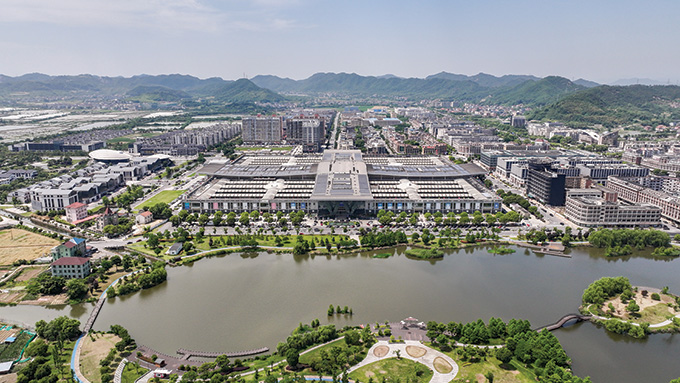
Known as the “Pearl Capital of China,” Zhuji in Zhejiang Province produced 600 tonnes of freshwater pearls in 2024, accounting for 70 per cent of total production worldwide. In 2024, annual sales of pearls in Zhuji exceeded RMB50 billion (around US$6.98 billion), government data showed.
Zhuji’s pearl sector encompasses freshwater pearl cultivation, processing, manufacturing, wholesale, research and development, and retail sales.
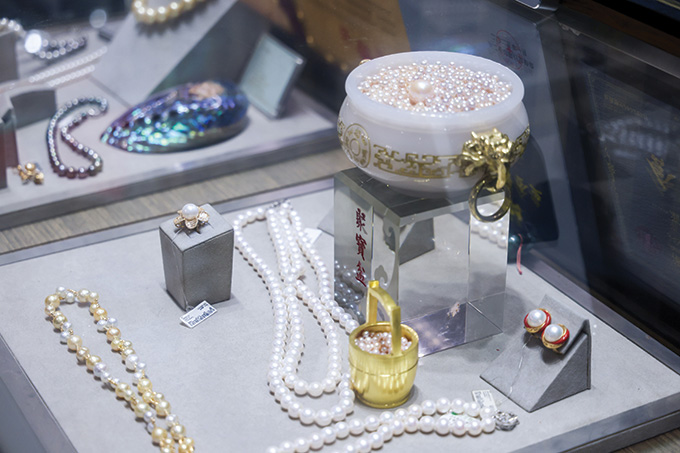
He revealed that Chinese freshwater pearls are increasingly becoming more competitive due to improvements in quality while maintaining their affordability. For instance, he said the quality of rice pearls offered by his company is now on a par with that of Akoya pearls in terms of whiteness and lustre. Rice pearls, however, are more economical. “The freshwater pearl sector has made significant strides through years of research and development, but it will take time for people to fully grasp and appreciate the beauty of exceptional, better-quality freshwater pearls,” He remarked.
Y&M Pearls, a vertically integrated company based in China involved in the manufacture, wholesale and retail of saltwater pearls as well as jewellery design, expanded its portfolio in 2025 to include top-notch freshwater pearls.
The company unveiled two new high-quality freshwater pearl collections certified by the Japan Pearl Science Laboratory. “The Japan Pearl Science Laboratory specifically designated the names ‘Lunastra’ and ‘Splendora’ for our pearl offerings, marking a pivotal milestone in establishing Chinese freshwater pearls as premium-quality products with international recognition,” said Y&M Pearls Chairman Ye XiaoBo.
The “Lunastra” pearl is certified as the “best gem-grade (highest quality) freshwater pearl in white colour” while the “Splendora” designation pertains to the company’s top-quality white and coloured freshwater pearls.
Pearl grading was based on five key criteria: Lustre, thickness of pearl layers, body colour, imperfection, and surface and shape.
According to Ye, the certifications are expected to elevate the market’s perception of Chinese freshwater pearls, which are generally seen as low-quality and inexpensive. Certifications can also assure the authenticity and quality of the cultured freshwater pearls, free from fluorescent brightening agents.
Necklaces in the collections feature a custom NFC chip embedded in the clasp. By tapping an NFC-enabled smartphone, users can instantly access detailed product information stored on the chip, including the pearls’ name, size, weight, grade and certificate number.
“We developed this traceability system to prevent counterfeiting and enhance the traceability of our product,” Ye explained. “These freshwater pearls, graded by the Japan Pearl Science Laboratory and equipped with traceability features, truly epitomise the exquisite nature of Chinese freshwater pearls.”
Prioritising quality
According to Ruby Liu, president of Guild Gem Laboratories, the Chinese market is seeing increased consumer demand for higher-quality saltwater and freshwater pearls in recent years.
This is mainly driven by the growing middle-class segment as well as rising awareness and knowledge of pearls in the market. “These consumers are increasingly taking into consideration the quality of the pearls that they purchase,” explained Liu.
There is also mounting requests for certification of loose pearls and pearl jewellery from both Chinese companies and individual buyers. Data from Guild Gem Laboratories likewise showed a notable uptick in the share of white freshwater pearls bearing the so-called “Aurora” grade in the mid- to high-end pearl jewellery market. This indicates a growing desire for higher-quality pearls, she added.
According to Guild Gem Laboratories’ pearl-grading standard, the term “Aurora” refers to the highest-quality freshwater pearl in white colour.
Liu, meanwhile, pointed out a certain stereotype regarding freshwater pearls, which are often perceived as being inferior in quality compared to other cultured pearls. This stemmed from the fact that top-range freshwater pearls are often sold with average or even “very poor-quality pearls,” which does not help freshwater pearls’ reputation.
“A pearl-grading standard enables consumers to have a clearer understanding of the quality of pearls and assists upstream merchants to better classify the pearls and accurately reflect their true value,” said Liu.
Growth prospects
Industry stakeholders participating in the 2025 Shanxiahu World Pearl Congress in May highlighted the importance of boosting Chinese freshwater pearls’ visibility around the world. Hence, expanding to overseas markets is a key growth strategy.
Chinese freshwater pearls are steadily gaining traction in the US and European markets, not only because of price and appearance but also due to their diverse range of colours.
“Japanese Akoya pearls are the priciest and most valuable in the US market now. However, Chinese freshwater pearls are winning the game in terms of sales volume,” said Jeremy Shepherd, president of the Cultured Pearl Association of America (CPAA) and president and CEO of Pearl Paradise, at the congress’ “Global Pearl Industry Development Outlook” panel discussion.
He added that US consumers prefer non-beaded pearls, which are mostly produced in China.
David Troth, founder of UK-based jeweller David Harry Jewels, remarked that the European market is embracing the wide range of freshwater pearl colours, particularly pastels such as lavender and peach.
While the US and European markets are showing strong interest in Chinese freshwater pearls, He of the Professional Association of Pearls, Zhejiang noted that India, Indonesia and other Southeast Asian markets likewise present tremendous potential.
According to Troth, capitalising on the freshwater pearls’ compelling narrative is crucial to bolstering the pearls’ global reach. Telling authentic stories about the pearls’ origin, unique characteristics and China’s pearl culture, among others, could strongly resonate with global consumers who are seeking more meaningful purchases.
Pearl industry veteran Pierre Fallourd agreed. “I visited China three times in the last six months and noticed China’s evolving pearl industry, with several innovations such as automatic pearl sorting and drilling machines, and sustainable farming techniques. These, and the stories behind pearl production, deserve to be told and valued. These narratives will drive growth in the freshwater pearl sector,” shared Fallourd.
China’s government has also ramped up support for cross-border e-commerce businesses. For instance, Shanxiahu expanded its overseas sales channels by partnering with major online platforms like Amazon, TikTok, AliExpress and Wish, as well as accelerating the construction of overseas warehouses that support efficient logistics and faster delivery of products to global customers.