Luxury industry executives said hyper-personalisation, experiential retail and a growing pre-owned and value-conscious market are the top consumer trends likely to shape the luxury business in 2026.
Overlaying these trends is a tone of macroeconomic caution, according to Deloitte’s Global Powers of Luxury 2026, published on January 23.
The report surveyed 420 C-suite and senior executives across 10 countries. All respondents were directly responsible for or exerted significant influence on major strategic initiatives within their organisations spanning key luxury sectors, including jewellery.
“High inflation, tariff uncertainties and other headwinds have tempered the industry’s exuberance over the past few years,” it noted. “The post-pandemic euphoria of 2021–2022 has given way to a more measured reality in which executives anticipate a cautious consumer buffeted by persistent inflation, rate hikes and global uncertainty.”
The report said these structural factors, alongside the expectations of Gen Z, who demand authenticity, sustainability and seamless digital-to-physical engagement, are fundamentally reshaping how brands engage their global audiences across major markets, from Europe to Asia.
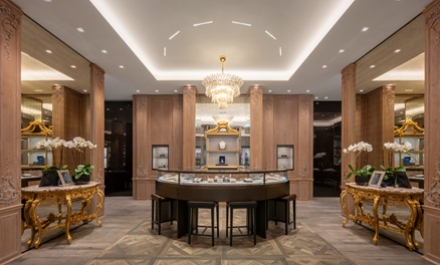
In the fine jewellery sector, some manufacturers are embracing invitation-only ateliers, master classes and gallery-style previews that spotlight craft and culture rather than focusing just on transactions, revealed Deloitte.
The survey results further revealed that China maintains a pivotal role in the global luxury market, and luxury executives still predict it to be the main driver of luxury consumption in 2026 globally. Japan, the Middle East, India and Europe are also expected to fuel luxury sales.
The luxury jewellery sector is foreseen to grow 9.3 per cent over the next 12 months, according to the study. By comparison, luxury travel could see an increase of 36.2 per cent.
Meanwhile, “customer centricity” retains its role as a strategic anchor, particularly in geographies like India and the Middle East where consumer sentiment is evolving rapidly.
“Customer centricity is critical: Staying close to consumers provides early signals on preference changes, allows brands to pivot assortments and messaging before competitors, reduces forecasting and inventory risk and improves price realisation by matching value to local elasticity,” the report said.
By category, jewellery shows a strong focus, as its high-involvement purchases and after-sales relationships amplify the returns to trust, personalisation and continuity.
Innovation and transformation
The year 2026 will also see a heightened focus on product mix and operational discipline, with investments concentrated on brand expansion, digital acceleration and enhancing omnichannel customer experiences.
"Key enablers include talent development and sustainability, alongside the integration of data, artificial intelligence (AI) and automation," the report said. "Physical flagship stores are being reimagined as theatrical, insight-driven destinations to foster loyalty and engagement, while enterprises aim to leverage technology to enhance customer interactions and operational efficiency."
AI is expected to have a major transformative impact on the luxury jewellery industry in the next five years, according to 31.7 per cent of jewellery executives surveyed. Meanwhile, 27 per cent mentioned innovations in materials and production while the rest pointed to sustainability improvements and technologies for supply chain traceability and transparency, advanced data analytics and virtual commerce.
In the area of sustainability, encompassing both material innovation and supply chain transparency, jewellery is among the top categories showing the highest expectations for innovation in materials and production.
Jewellery, alongside watches, also demonstrated the highest perceived opportunity for virtual commerce, as immersive storytelling and digital display enhance desirability in high-engagement, high-value purchases, according to the report.