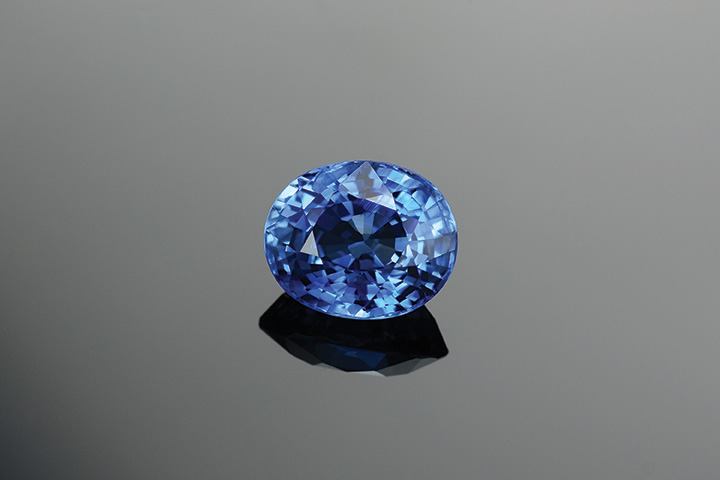
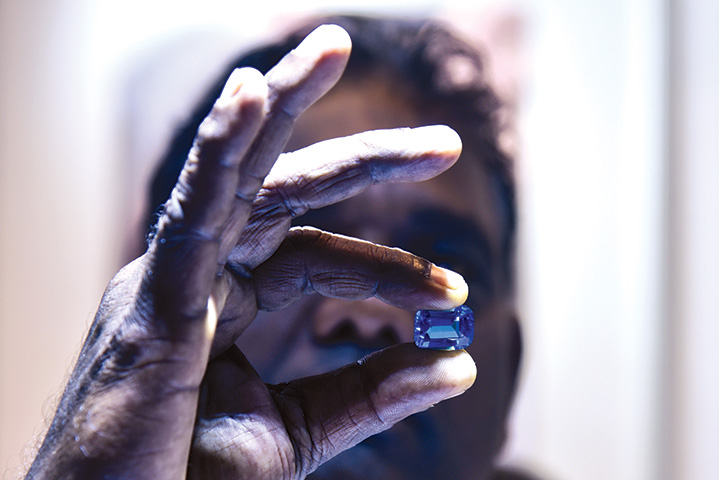
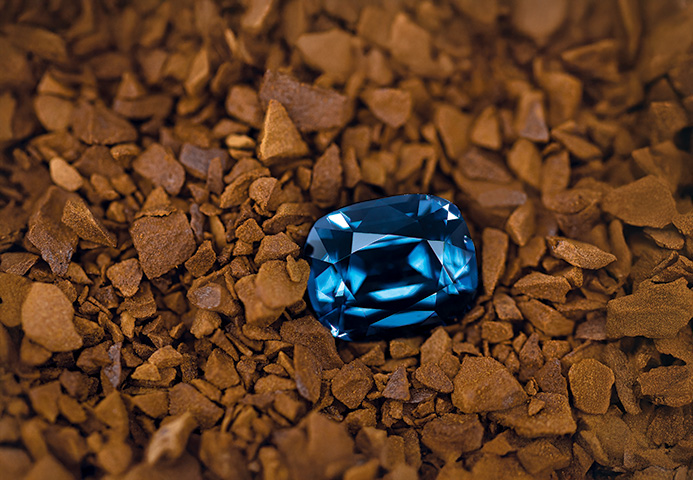
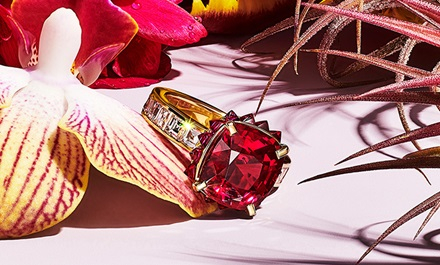
Home to beloved Ceylon sapphires and other coveted gems, Sri Lanka is preparing for the next phase of growth through global expansion.
This article first appeared in GEMSWORLD 2026.
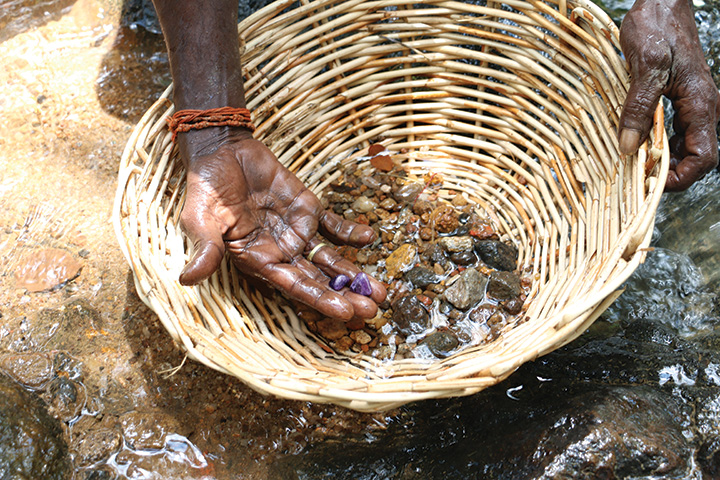
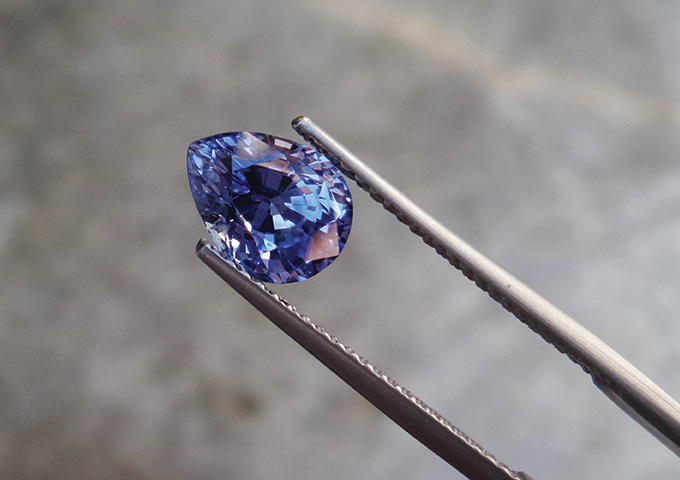
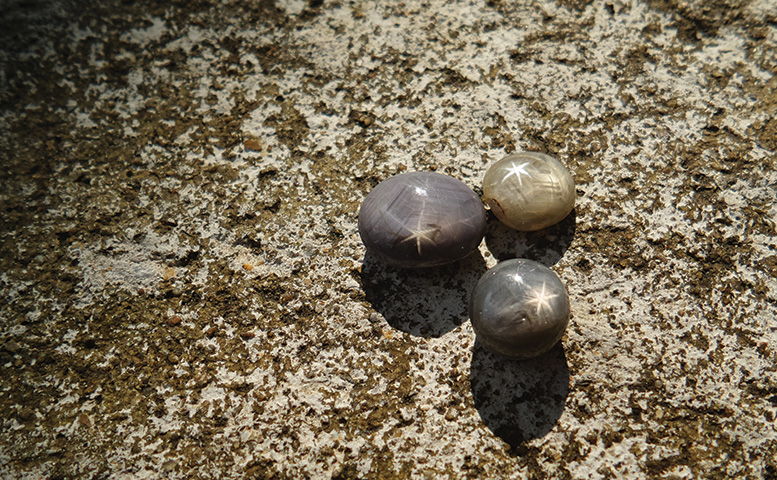
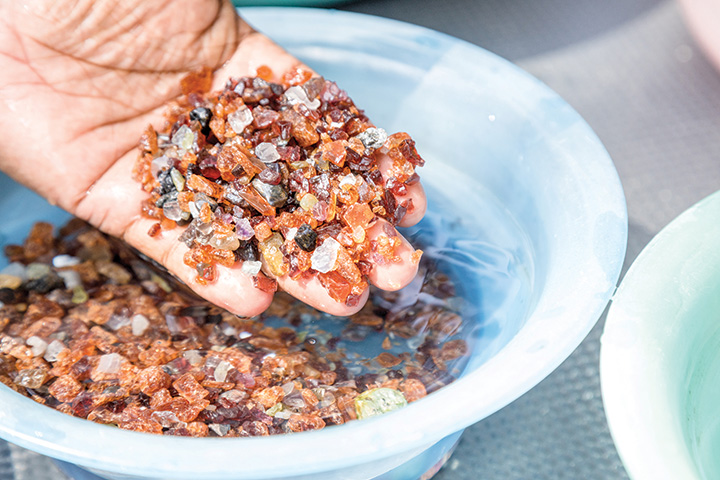
Regarded as one of the most prolific gemstone sources and trading centres in the world, Sri Lanka produces highly sought-after Ceylon sapphires alongside 75 other gems including Padparadscha sapphire, cat’s eye chrysoberyl, ruby, spinel, tourmaline and moonstone, to name a few.
Known as Ceylon until 1972, the country has five top gem-producing regions, the main one being Ratnapura. Dubbed the “City of Gems,” Ratnapura has been producing sapphires for more than 3,000 years.
Today, the island’s gem industry employs approximately 600,000 people, including miners, cutters, polishers, dealers and jewellers. Gem and jewellery exports remain stable but are somehow stagnating, reaching US$282.06 million in 2024 from US$388.16 million in 2023.
As of September 2025, exports in this category are at US$267.11 million, government data showed. Its major markets are Switzerland, Israel, the US, India, Thailand, Hong Kong, United Arab Emirates, Belgium, France and Japan.
According to gem traders, the country is banking on global expansion and the inherent allure of Sri Lankan gems to sustain its edge in the global trade.
Market appetite
Business is steady but could be better, according to Armil Sammoon, chairman of Sapphire Capital Group. While traders still fulfil regular orders for single stones of 1 to 5 carats, resistance to current prices is building up, particularly at trade shows.
Consistent demand coupled with tighter supply at the mines are putting pressure on Sri Lankan gem prices, which have risen by around 20 to 30 per cent between 2023 and 2025, revealed Sammoon.
Sameen Ariff, director of Sales & Marketing of Regal Gems (Pvt) Ltd, explained that supply is not enough to meet extremely high demand for nicer-quality goods, hence the spike in prices.
“The market has slowed down due to uncertainties, but we do not see prices for premium goods dropping,” he explained. “Prices are up by almost 100 per cent from around three years ago.”
Regal Gems’ top-selling products are unheated blue, green, yellow, purple and Padparadscha sapphires. It focuses on finer, cleaner stones as these are what buyers look for now, added Ariff.
Fresh demand
With demand from China almost coming to a halt, Sri Lanka is training its sights on other export destinations such as India and the Middle East.
“There is a new generation of buyers in India who are starting to understand and enjoy coloured gemstones, and this bodes well for gemstone producers like Sri Lanka,” remarked Sammoon.
He said the Middle East also presents glowing potential, with appreciation for coloured gems in the region growing from strength to strength as consumption trends point to heightened preference for colour.
Safraz Jabir, founder of Safaiyers, agreed, citing tremendous opportunities specifically in Dubai and Saudi Arabia, which have established jewellery markets. Jabir also represents Sri Lanka's Ceylon Gem and Jewelry Trade Association (CGJTA).
“There is a lot of buying activity in the Middle East’s gem and jewellery trade. Due to trade restrictions in China, the ultra-rich are also relocating to Singapore and Dubai,” he explained. “Similarly, emerging buyers are more educated and receptive to coloured gems. These are the markets we want to tap.”
Given an ongoing instability in the diamond market, some diamond traders are looking to diversify by offering coloured gems, which is creating fresh demand, said Jabir. Then there is the affluent, mature consumer who understands the market and is willing to invest in top-tier stones, he added.
Both Sammoon and Jabir said limited production only adds to the rarity of these gems.
Apart from quality, buyers are increasingly seeking bigger stones, specifically blue sapphires of over 10 carats, revealed Ariff. Regal Gems sells mainly to the US, Europe and China.
Smaller calibrated stones, meanwhile, are moving faster in China, said Tharaka Uduwara of Ellawala Exports Pvt Ltd.
The company, which has been around for 70 years, focuses on unheated blue and Padparadscha sapphires and other gems. It exports mainly to Europe but is eyeing to strengthen its business in China.
Irradiated gems
In early 2025, the World Jewellery Confederation (CIBJO), the American Gem Trade Association (AGTA) and the International Colored Gemstone Association (ICA) raised concerns over undisclosed irradiated rubies and sapphires entering the market, particularly from Sri Lanka.
These gemstones are reportedly unstable, with colours fading to almost white or light pink or becoming dark red in the case of rubies. AGTA also reported that vendors could be using radiation from various sources to create such temporary, undisclosed treatments.
The Gemological Institute of America (GIA) defines irradiation as exposure of a gem to an artificial source of radiation to change its colour.
In response, the Sri Lankan Gem and Jewellery Association (SLGJA) said measures are being taken to combat the problem. According to Jabir, this multi-pronged approach involves strengthening lab-testing capabilities to detect irradiation, pushing for stricter regulations and collaborating with international associations.
An industry-wide awareness campaign condemning the practice as unethical and educating the local trade is also being implemented.
“Global associations have welcomed these steps but emphasise that consistent implementation and verifiable results are now critical to rebuilding trust and ensuring long-term integrity in the coloured gemstone trade,” explained Jabir.
He said, irradiated gems, once detected, become difficult to sell as lab reports, like those from GIA, Swiss Gemmological Institute SSEF and GRS Gemresearch Swisslab AG, among others, would state “colour unstable” in the findings, especially for rubies.
“This is a good sign as it will discourage those who engage in this treatment process,” added Jabir.
Ariff, for his part, said these were isolated cases and not as prevalent as previously reported.
“We regularly check with our customers and none of them have come across such products,” he explained. “We have no first-hand experience mainly because we are very careful who we purchase from.”
Uncertainties, opportunities
Global challenges such as the Israel-Palestine and Russia-Ukraine wars and the US tariff issue have tempered customer sentiment. As of December 2025, Sri Lanka was facing a 20 per cent tariff on gem and jewellery exports to the US, which is a major market.
“For a developing country like us, it is a challenge to absorb additional costs,” said Jabir. “Our government, however, continues to negotiate with the US. We are hoping they will reduce the tariffs or remove it altogether.”
Ariff agreed, adding that orders from the US have dropped significantly due to higher tariffs. His company exhibits at the Tucson and Las Vegas shows but with new regulations in place, participating in both fairs may no longer be an option.
“It is a loss for us and for our customers, but it is not practical to be there and not make a sale because of the tariffs. It does not make sense. We can find other ways to fulfil orders or in some cases, share the cost with our customers, but that is not sustainable,” explained Ariff.
Like Jabir, he is hopeful that ongoing negotiations will result in a favourable solution for the Sri Lankan gem trade.
Sammoon, meanwhile, views the lack of new talents in the gemstone trade as a major hurdle to long-term growth.
“A great deal of people in the trade moved to other sectors post-Covid. There is now a need for a new stream of skilled workers or to retrain existing ones in gem cutting and polishing as well as jewellery design,” he explained.
Removal of US tariffs, market recovery in China as well as educating buyers on the gems’ mine-to-retail narrative could support longevity and sustainable growth in Sri Lanka’s gem sector, the traders said.