Technology leaders in the jewellery trade are upgrading existing traceability solutions to ensure that these remain robust and secure amid new threats to transparency, ethical sourcing and origin determination.
This article first appeared in the JNA March/April 2026 issue.
During the pandemic, a swab test became synonymous with health diagnostics, but Provenance Proof – an initiative by Gübelin Gem Lab – has redefined its purpose in the jewellery world.
Swab tests are now used to recover physical tracers applied to diamonds for analysis at any point in the supply chain, revolutionising how the industry traces a gem's mine-to-market journey. Provenance Proof is conducting tests to see if swabbing works on emeralds while a pilot programme for application of physical tracers on other gems is underway.
Meanwhile, Authentia.io, a patented, blockchain-based traceability solution founded by its CEO, diamond specialist Bruno Scarselli, is setting its sights on regions like Africa, where ethical sourcing is a pressing concern. A key initiative is providing mines with accessible blockchain tools for provenance registration and streamlining costs through shared development. By fostering transparent value chains, Authentia.io not only reduces barriers to participation but also incentivises stakeholders to embrace responsible sourcing practices.
At De Beers, the emphasis is on expanding the reach and impact of Tracr and ORIGIN De Beers Group. As traceability continues to shape the future of the diamond industry, scaling the adoption of these modern solutions across the value chain is paramount. By providing retailers and consumers with trusted, validated data, De Beers is ensuring greater confidence in the authenticity and responsible sourcing of natural diamonds.
As the jewellery trade faces evolving challenges, including advanced gemstone treatments and rising threats to ethical sourcing, technology pioneers are stepping up, refining their traceability systems to stay ahead and safeguard the integrity of the supply chain.
Provenance matters
Provenance Proof uses advanced DNA-based technology by applying nanoparticles to the gemstones for origin determination. Large-scale application is being done on emeralds since 2017 and melee diamonds since 2025, with pilot programmes currently underway for pearls, opals and jewellery.
According to Daniel Nyfeler, managing director of Gübelin Gem Lab and Provenance Proof, the concept of a "swab test" has taken on a new meaning in the diamond industry, thanks to advancements in nanoparticle technology.
Unlike earlier methods that required immersion, this new approach allows for a simple swab test to collect the nanoparticles, which are then analysed using Polymerase Chain Reaction (PCR) technology to verify the exact mine where the gem originated, the miner, extraction date and other details. This innovation not only simplifies the process but also makes it more practical for widespread adoption.
For instance, this method has already been used to verify that diamonds supplied to a certain watch brand from Europe originated from a specific KGK facility in Surat. This level of precision and traceability is a significant step forward in ensuring transparency and ethical sourcing in the diamond supply chain.
Looking ahead, Provenance Proof is working on equipping its clients with their own PCR instruments to make this technology more accessible, revealed Nyfeler. The plan involves setting up regional PCR centres in key locations such as Europe and the US, allowing firms to conduct their own analyses without relying on external labs.
“Over the years, we have always worked with miners or cutters, and now, brands are interested. They want convenience. They prefer the swab test. We hope it will be applicable to any type of material,” noted Nyfeler.
Provenance Proof aims to have a fully operational solution this year that meets the convenience expectations of brands while maintaining the highest standards of traceability. This initiative represents a significant leap forward in empowering the diamond industry with tools to ensure ethical sourcing and build consumer trust.
Democratising the traceability technology
Authentia.io has implemented key upgrades to address threats like data tampering, counterfeit insertion and supply chain vulnerabilities.
These updates include enhanced blockchain protocols for immutable record-keeping, advanced encryption, decentralised verification, real-time monitoring tools and nano-tagging to link physical diamonds with digital records, revealed Scarselli.
Such critical improvements ensure compliance with international standards and strengthen security against origin fraud. Leveraging Web3 and AI technologies, Authentia.io provides end-to-end traceability, provenance verification and ownership titles for natural diamonds.
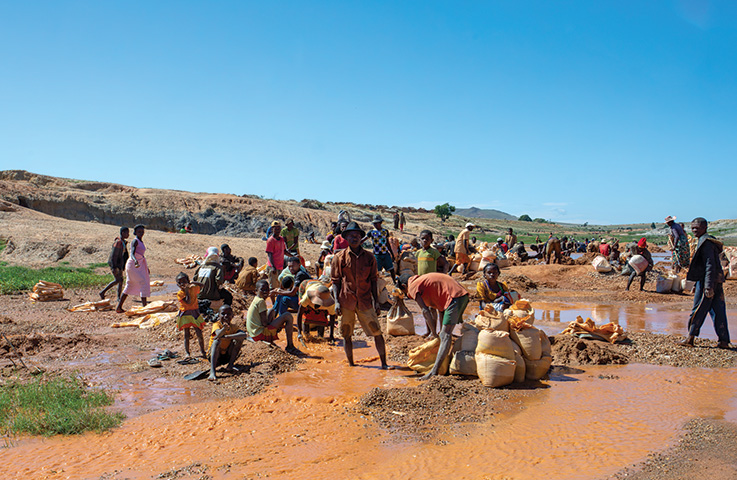
Authentia.io is also expanding its reach in Africa by partnering with artisan and small-scale mining operators to address ethical sourcing challenges. Initiatives include providing accessible blockchain tools for provenance registration, reducing costs through shared development and incentivising participation via transparent value chains.
In South Africa, certification programmes enhance market access for miners, while advocacy with industry bodies promotes adoption, explained Scarselli. Pilot programmes in Angola are testing traceability protocols, with successes in usability and challenges like limited digital infrastructure shaping adaptations such as offline capabilities and localised training. These efforts aim to mitigate risks like labour exploitation and environmental harm while ensuring scalability.
Moving forward, Authentia.io plans to deepen penetration in Africa, expanding from South Africa to Angola and Zambia while exploring opportunities in Asia and Europe for luxury asset tracking.
“We aim to advance AI-driven analytics and integrate with emerging Web3 standards for broader asset classes beyond diamonds,” noted Scarselli. “Upcoming partnerships include those with gemmological labs and luxury brands for joint traceability initiatives, with enhanced nano-tagging set for rollout in mid-2026 to support fractional ownership models.”
The future of the diamond trade
De Beers continues to drive innovation in diamond traceability, positioning itself as a leader in ethical sourcing and transparency. De Beers-owned blockchain-based platform Tracr, which has scanned over four million rough diamonds by 2025, is scaling its capabilities to register more of the global diamond supply, including smaller stones, while transforming into an industry-wide platform with shared equity among key stakeholders.
Collaborations with Sarine Technologies and UNI Diamonds enhance Tracr’s ability to track diamonds from rough to polished, leveraging existing infrastructure for seamless adoption. Recent integrations, such as DiaDNA in India, further strengthen its scientific validation capabilities.
Alongside Tracr, De Beers launched ORIGIN De Beers Group in the US in late 2025, offering consumers an immersive experience to explore the journey of their diamonds, supported by blockchain and AI technologies. Early feedback highlights strong consumer interest in transparency and storytelling, with plans to expand ORIGIN to 100 stores this year from 50 in 2025.
De Beers is also addressing traceability at the artisanal mining level through its GemFair programme, which provides miners with tools for provenance registration, training and access to international markets. Initiatives like land reclamation, safety training and forward purchase financing deliver long-term benefits to miners and their communities, fostering responsible practices.
Looking ahead, De Beers said traceability is going to play an even more critical role in the global trade.
“Traceability is set to become a central pillar of the diamond industry’s future,” the company said. “As consumer expectations on transparency and traceability rise, as retailers experience the benefits that traceability provides for storytelling, and as regulatory and sustainability commitments are strengthened, transparency will shift from a ‘nice to have’ value-add to a fundamental expectation for trust and vital tool for consumer engagement.”
Through Tracr’s blockchain platform and ORIGIN’s consumer-facing experience, De Beers said it is creating an immutable, end-to-end digital record for diamonds, ensuring trust and transparency. “Our focus now is on scaling adoption across the value chain so retailers and consumers can rely on trusted and validated data for even more natural diamonds,” noted De Beers.