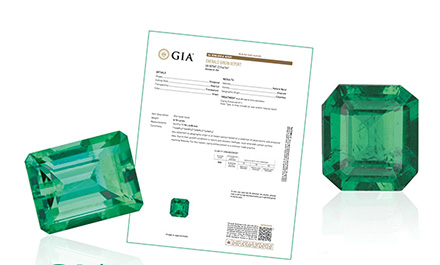
The Gemological Institute of America’s (GIA) newly redesigned gemstone reports offer a fresh format that emphasises clarity and storytelling, demonstrating the institute’s dedication to continuously expand its services to address evolving market needs.
This article first appeared in the JNA March/April 2026 issue.
Coloured gemstones will continue to be a strategic focus for the Gemological Institute of America (GIA) in 2026 as buyers increasingly gravitate towards colour, compelling narratives and more dynamic gemmological services.
According to Shane McClure, global director of GIA Colored Stone Services, the institute constantly seeks opportunities to expand its science-based services to meet the needs of traders and consumers.
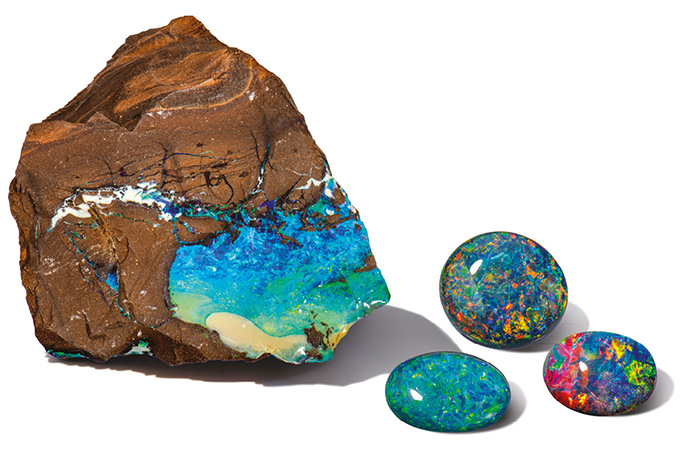
On January 1, 2026, GIA unveiled its revamped coloured gemstone reports featuring an elevated format and layout for enhanced storytelling and expanded origin-determination services. The new reports highlight pertinent gemmological details, making each gemstone's unique story easier to appreciate and understand. The institute also started offering provenance services for opal, peridot and demantoid garnet, in addition to alexandrite, emerald, Paraiba tourmaline, red spinel, ruby and sapphire, and the more recent country-of-origin determination for untreated jadeite jade and omphacite jade from Myanmar (Burma) or Guatemala.
“As science and our knowledge progress, we will incorporate more species of coloured gemstones into our services,” revealed McClure.
These expanded services are based on GIA’s extensive research and collection of more than 30,000 reference samples – many of which were collected from over 100 field expeditions by GIA gemmologists and researchers. Complementing these are GIA’s advanced instrumentation and testing equipment.
“It is important to understand that geographic origin determination is an informed opinion,” explained McClure.
Facing challenges
Staying ahead of new, more complex coloured gemstone treatments is always a priority for GIA. Critical to ensuring the accuracy and cutting-edge reliability of its reports are technological advancements alongside trade consultations.
“Our strong relationships with the trade alert us to new treatments,” shared McClure. “Our research, including treatment experiments, allows us to stay ahead of new methods of altering a gemstone's appearance before they reach the market. Combined with our world-class analytical equipment and expert, experienced staff, this helps us overcome the challenges of new gem treatments.”
Technology, especially advanced instrumentation, also supports its global team of skilled gemmologists. GIA keeps abreast of market developments through regular consultations with clients and active participation in several global organisations. GIA is a member of the Laboratory Manual Harmonisation Committee, which consists of seven major global gemmological laboratories working to harmonise language used in gemmological reports.
It also has representations on several committees at the World Jewellery Confederation (CIBJO), while some GIA gemmologists are delegates to the International Gemmological Conference. The institute regularly attends conferences organised by the International Colored Gemstone Association as well as major trade shows. Its findings are likewise published in Gems & Gemology and on the GIA website.
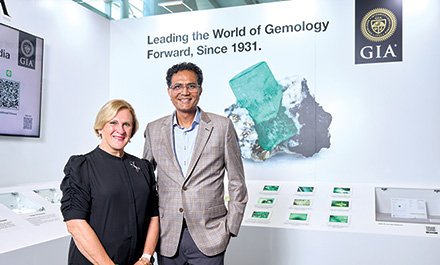
“Participating in shows with booths and a seminar is one of the most important ways to engage with the trade,” noted McClure. “We share news and developments through press releases, and posts on our website and social media platforms, which are very important channels for reaching consumers.”