Tourmaline’s versatility and variety firmly establish its place in the creative decisions of jewellery brands, designers and manufacturers, with Paraiba tourmaline, rubellite and emerging variants leading the way.
This article first appeared in GEMSWORLD 2026.
Tourmaline is having a moment in jewellery circles, with several variants enjoying heightened interest across many markets around the world.
Ranking 7 to 7.5 on the Mohs scale, the gemstone lends itself well to jewellery manufacturing. Its name, derived from the Sinhalese word “tura mali,” meaning stones with mixed colours or stones of many colours, perfectly encapsulates its appeal.
Adding to tourmaline’s allure is its prominent presence in the recent collections of high jewellery brands. In fact, the final chapter of Bulgari’s Color Journey series is a high jewellery capsule collection launched last year that is dedicated solely to this coloured gemstone, which the brand describes as “a true celebration of nature and a flawless expression of elegance and versatility.”
Featuring over 30 jewellery pieces, the collection shines the spotlight on the gem’s fascinating colour diversity – from the oceanic blue-green glow of Paraiba tourmaline and the intense red of rubellite to the crisp freshness of mint green, the captivating green and blue tones of lagoon tourmaline and the delicate pinks and greens – that enable Bulgari to create wondrous chromatic combinations.
Paraiba’s appeal
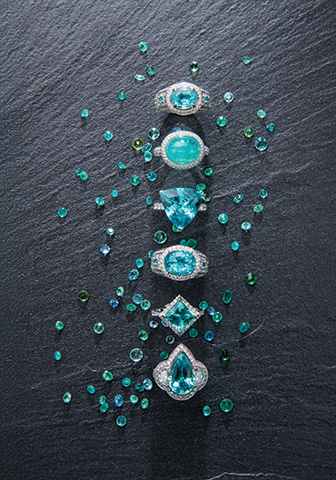
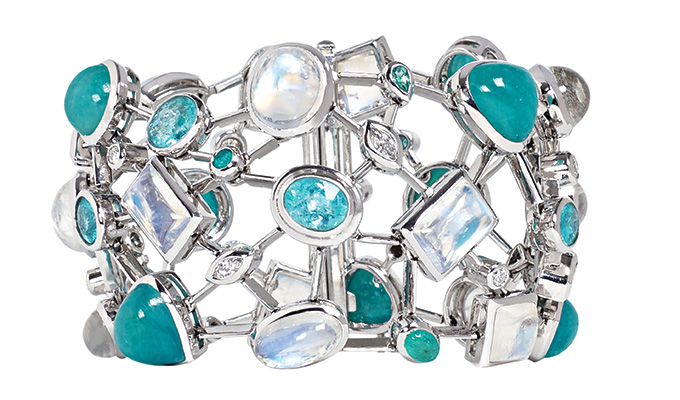
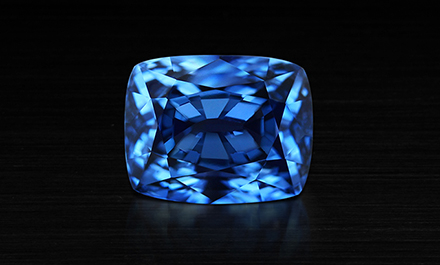
Paraiba tourmaline arguably takes pride of place in the tourmaline family, with its electrifying neon blue hue captivating consumers the world over.
Gem dealers in the Middle East are witnessing strong demand for Paraiba tourmaline among their clients, while companies catering to Asian and European markets are likewise enjoying higher sales.
Picapau Gemstones, which specialises in Paraiba tourmaline, established operations in Brazil some 30 years ago before moving to Bangkok in 2021. The company sources its rough from Mozambique, Brazil and to a certain extent, Nigeria. All its production processes – from cutting and treatment to polishing – are conducted inhouse at its facilities in the Thai capital.
According to Director Yago De Sa, demand has been robust for Paraiba tourmalines of 3 to 7 carats, with cushions moving particularly well.
In recent years, Chinese and Indian companies have emerged as Picapau’s main clients for the stone.
Buyers from Hong Kong, Italy, Germany, the US and China opt for medium- to good-quality Paraiba tourmalines while Brazilian customers gravitate towards lower- to mid-range stones. Indian gem dealers, meanwhile, tend to purchase large volumes of polished Paraiba tourmalines but at lower price points.
According to De Sa, most qualities of the stone move well in the market, from commercial goods to high-end material. Paraiba tourmaline can thus command prices from US$1,000 to over US$100,000 per carat. Exceptional stones from Brazil may even fetch US$150,000 to US$200,000 per carat, he revealed.
The company official expects market appetite for Paraiba tourmalines to further increase in the coming years. “The competition now lies in the supply side – the rough is extremely expensive and scarce. Fortunately, we have an extensive inventory of Paraiba tourmalines along with good access to big quantities of rough,” he added.
Hong Kong-based jewellery designer Tayma Page-Allies got in on the Paraiba tourmaline craze ahead of most, introducing it in her collections as early as 2008. To this day, it remains a popular gem in her creations. She also maintains an expansive selection of loose Paraiba tourmalines from Brazil that she collected over the years.
“Paraiba tourmaline is a game changer and disruptor in the jewellery space. Its striking colour is its main draw, setting it apart from other gemstones. It looks good on anybody; it goes well with any complexion,” she said, noting that a fine-quality Paraiba could easily cost more than certain emeralds, rubies and sapphires.
Rising stars
Page-Allies has expanded her range to feature more of Paraiba tourmaline’s other colours as well, using pink, green and yellow variants as some would use fancy sapphires.
Indeed, the other colours of Paraiba tourmaline have been making their presence felt.
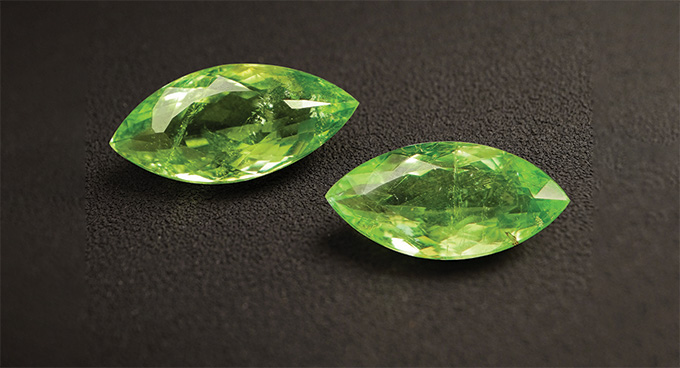
US jewellery brand Bavna showcased a collection with green Paraiba tourmaline slices before the pandemic while gem dealer Dynamic International highlighted its selection of certified green Paraibas in late 2025.
Rishabh Malpani, director of Dynamic International, said, “Our collection includes seven neon green Paraiba tourmalines with not a hint of blue in them. They are not as expensive as the blues but have a delightful neon shine that is rarely found in coloured gemstones.”
Apart from the famed Paraibas, other tourmaline varieties are staples in jewellery collections.
Pinks, greens and watermelons with red or pink centres and green rims are among designer and brand favourites, enabling versatile, cost-effective yet elevated designs and colour combinations.
Rising in prominence too is lagoon tourmaline, which is catching the attention of gemstone aficionados seeking fresh, emerging options. Malpani identified the blue-green gem as one of the emerging stars of the coloured gemstone world. Seafoam green and mint green tourmalines are also gaining popularity, he continued.
Engaging rubellite
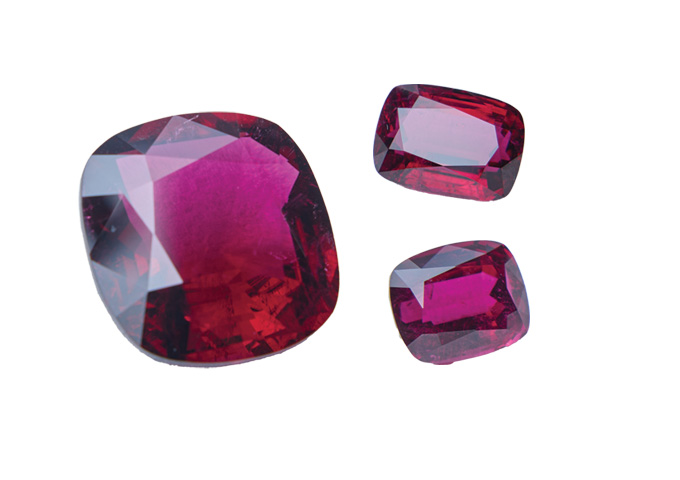
Rubellite is a tried-and-tested stalwart in the tourmaline family. Coming in red and pinkish-red hues that maintain their red tone under lighting tests, rubellite frequently appears in the creations of luxury jewellery brands. Its vibrant colours and relative affordability make it a compelling choice for high-end designs.
And while the buying frenzy – particularly in the Chinese market – has died down, interest in rubellite remains steady.
Rubellite was once a top performer for RMC Gems, which still maintains an extensive inventory of the stone to fulfil client requirements.
RMC Gems HK Co General Manager Vishal Bardiya cited the period from 2013 to 2016 as the heyday of rubellite in the Chinese mainland. Today, demand is stronger from Europe and India, reflecting shifting market dynamics.
Page-Allies attributes rubellite’s popularity among luxury jewellery brands to its colour and price points. “If a brand wants to make a jewellery piece with red stones, its choices are ruby, rubellite and rhodolite garnet. Producing a big spread with rubies would cost millions. Rubellite is a more cost-effective option, making it a staple for brands seeking to balance luxury and affordability,” she explained.
And while rubellite from the Cruzeiro mine in Brazil is often preferred, material from Nigeria is gaining ground as well. “Rubellite from the early mines are gorgeous too – pinks, pink purples and reds. They are however very hard to find nowadays,” Page-Allies continued.
Enduring value
Rubellite is still among the star performers for Lunawat Gems, which supplies these to luxury jewellery brands, among other clients. The company cuts its coloured gemstones in Jaipur and sells these through its offices in Bangkok and Hong Kong.
According to Shrenik Lunawat, director of Lunawat Gems, the shortage of good-quality rough has driven up rubellite prices since 2022. Stones that went for US$200 to US$250 per carat four years ago can now fetch US$600 to US$800.
“Finer-quality rubellites can even command US$2,000 per carat. A few years ago, no one would have imagined that rubellite prices could reach these levels,” said Shrenik.
At Jewellery & Gem WORLD Hong Kong 2024, Lunawat Gems purchased a five-kilogram rubellite rough from Nigeria and presented the polished gem-quality stones at the 2025 show. “We have not found anything this big and this nice since. Only low-quality material is coming into the market now,” Shrenik said. “We have to always keep looking for the fine, transparent, high-quality goods and invest as soon as we get the opportunity.”
Colour preferences vary from market to market. Shrenik observed that pinkish-red rubellites perform well in Europe, while dark reds akin to rubies are preferred in India, China and Hong Kong. Bardiya agreed that ruby-red stones move well in China while pleasant vibrant rubellites are favoured by Italian jewellery designers and manufacturers. These regional preferences underscore the importance of tailoring offerings to specific customers.
RMC Gems’ rubellite production comprises mainly medium- to high-quality stones, which are currently much sought after by professional trade buyers.
Bardiya said, “India is showing the greatest potential for rubellite moving forward. Europe and the US are good clients too for the stone.”
Chinese demand will, however, remain soft due to market resistance to higher prices. Customers from the mainland have yet to fully accept current prices, which are at least 40 per cent higher than pre-pandemic levels. “Moreover, raw material is scarce. Quality goods will cost even more,” he added.
Tourmaline's popularity is poised to reach new heights as the gemstone continues to enchant markets with its vibrant hues and versatility. Rising consumer appetite for innovative and distinctive jewellery designs further cements its status as a premier option in the coloured gemstone world.