The Gemological Institute of America (GIA) is looking to develop origin determination services for cobalt spinel, in addition to an expanding list of coloured gemstones it is testing.
The institute recently started offering provenance services for opal, peridot and demantoid garnet, on top of alexandrite, emerald, Paraiba tourmaline, red spinel, ruby and sapphire. It also now providing country-of-origin determination for untreated jadeite jade and omphacite jade from Myanmar (Burma) or Guatemala.
Shane McClure, global director of GIA Colored Stone Services, said GIA is constantly finding ways to develop new services for the trade and that might include other origins in the future.
“We are looking at other things, and we will see what happens. But you never know what might be next – maybe cobalt spinel. We might do that,” revealed McClure at a recent GIA event in Hong Kong.
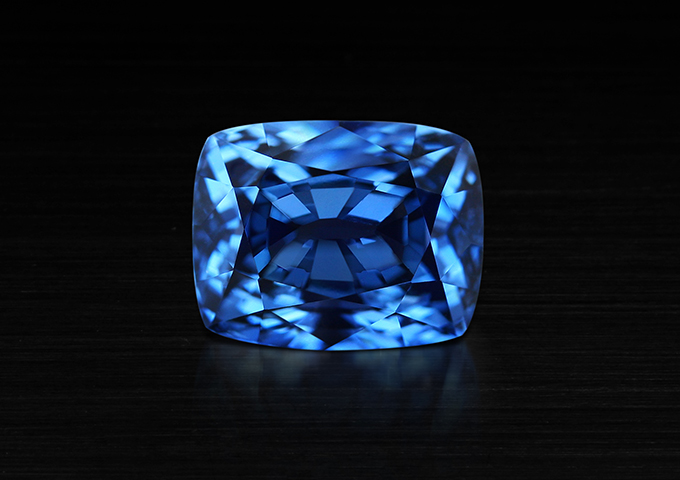
Cobalt spinel is often viewed as a viable alternative to blue sapphires. Those mined in Vietnam are highly sought after for their exceptional neon blue colour. Vietnamese cobalt spinel, especially from the Luc Yen region, also remains extremely scarce.
A new cobalt spinel deposit, discovered in Mahenge, Tanzania in 2022, meanwhile, produces stones that contain more iron, resulting in a darker, deeper hue.
McClure also disclosed plans to add other smaller sources to its origin determination services for opals, which currently include Australia, Ethiopia, Brazil, Mexico and the US.
The institute unveiled its revamped coloured gemstone reports on January 1, 2026, featuring an elevated format and layout for enhanced storytelling and expanded origin-determination services. The new reports highlight pertinent gemmological details, making each gemstone's unique story easier to appreciate and understand.
This is all part of GIA’s strategic focus on coloured gemstones in 2026 as buyers increasingly gravitate towards colour, compelling narratives and more dynamic gemmological services.
GIA’s expanded services are based on GIA’s extensive research and collection of more than 30,000 reference samples – many of which were collected from over 100 field expeditions by GIA gemmologists and researchers. Complementing these are GIA’s advanced instrumentation and testing equipment.