The Thai jewellery and gemstone trade continues to grow from strength to strength, bolstered by product innovation, resilience and a generally more favourable global economic environment.
This article first appeared in the JNA April/March 2023 issue.
Thailand witnessed solid improvements in the jewellery and gemstone trade as the disruptive effects of Covid-19 began to wane, thanks to local industry players’ ingenuity and resilience amid adversity.
Data from the Gem and Jewelry Institute of Thailand (GIT) showed that exports of gemstones and jewellery products, without gold, rose 30 per cent to US$8 billion in 2022. Including gold ornaments, which GIT said are generally viewed as safe and low-risk products, export figures showed a 50 per cent increase to US$15.05 billion.
Opportunities are vast in the bridal jewellery, self-purchase and gifting categories. The return of in-person trade fairs will also bode well for the gemstone and jewellery business. According to GIT, Thailand’s key export products include gold, gold jewellery, polished diamonds, silver jewellery and polished coloured gemstones.
Its most important export markets (excluding gold) from January to September 2022 were the US, India, Hong Kong, Germany, Singapore, the UK, Switzerland, Belgium, the UAE and Italy.
This growth momentum has been sustained throughout the beginning of 2023 as the country continues to capitalise on its strengths and innovate where needed, explained GIT Director Sumed Prasongpongchai.
Thailand also benefits from the country’s jewellery manufacturing prowess as well as local players’ ingenuity when conceptualising new designs. The country’s edge in the coloured gemstone trade is also undeniable.
“The future is promising for the gems and jewellery sector, particularly for coloured gemstones. Thailand is still considered a global leader in manufacturing and exports,” explained Prasongpongchai.
“Growth is driven primarily by labour skills, design creativity and human resource development,” he added.
Improving fundamentals
The GIT official said the reopening of major jewellery markets and relaxation of travel restrictions around the world were also instrumental in Thailand’s recovery, especially the return of physical events and face-to-face business transactions. The market’s growing penchant for gifting and celebrating special occasions also fuelled increased overseas orders for gemstones and jewellery.
Alongside these market developments was the continued rise of digitalisation in the trade, said Prasongpongchai. The pandemic proved that there is an alternative way to buy and sell jewellery, and that is through online channels, thanks to advances in digital technology.
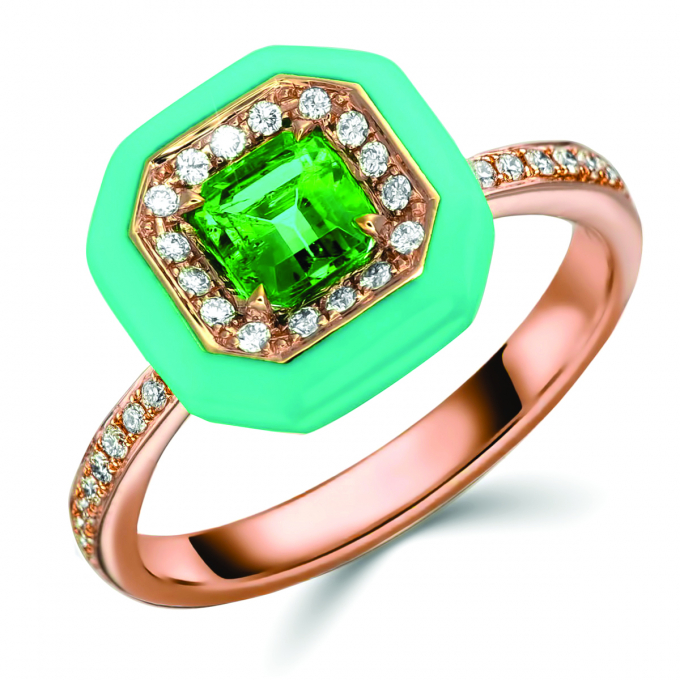
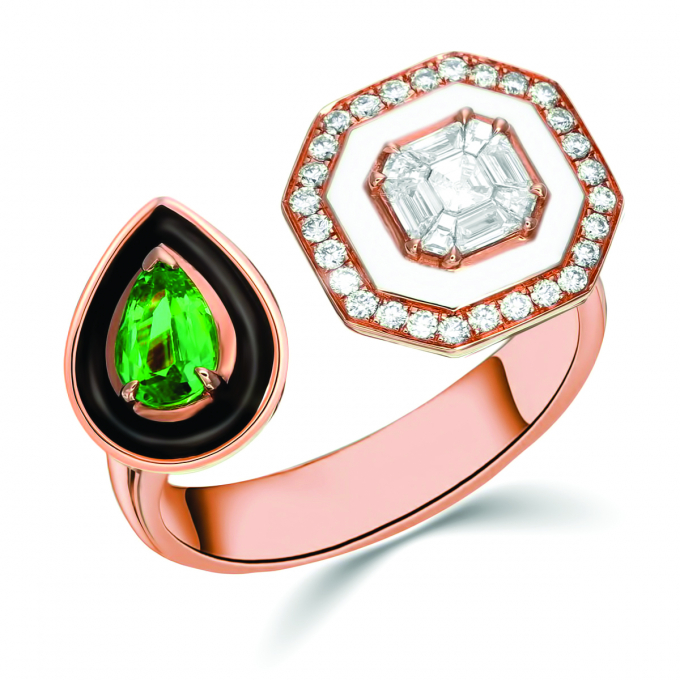
Jewellery designs are also evolving, according to Fares D. Alahmar, founder and CEO of Thailand-based Alahmar Co Ltd. The company unveiled its line of fine ceramic jewellery in 2019, but Covid prevented an originally planned global launch. The collection, which features an artistic combination of ceramic in multiple, vibrant hues with coloured gemstones and diamonds, however made waves in Thailand as well as in Dubai and Cairo, its established markets in the Middle East. It also found favour among buyers from Japan and Korea.
“Ceramic differs from enamel because it is much harder. It is scratch-resistant, and the colour does not fade with time,” revealed Fares. “Our main product is diamond jewellery, but we developed ceramic jewellery to meet the market’s need for fresh design ideas.”
Fares added that his company is the first in Thailand to produce ceramic jewellery using modern technology. Alahmar offers ceramic jewellery with rubies, emeralds, sapphires and diamonds. Prices range from US$250 to US$20,000 and up.
Buyer feedback was generally positive, which Fares attributed to a more progressive market that is highly receptive to change and new ideas.
“Jewellery manufacturers must create new products that nobody else has. Business is back and people want to restock, and they are looking for unique pieces. After three years of lockdowns and business disruptions, they are eager to see innovative designs,” noted Fares.
Post-pandemic customer
Vatsal Parmani, director of Jewelcraft Co Ltd, agreed that today’s customers are always on the lookout for new and different jewellery designs, no matter the price, as their aim is to stand out and differentiate themselves from the competition. “Thai jewellery designs mostly revolve around diamond illusion setting. This trend has stagnated, and it needs a refresh and a new perspective,” shared Parmani. “Customers want to see more statement pieces that highlight the brand’s creativity. Such pieces are avenues for brands to tell compelling stories and gain market attention.”
He explained that labour shortage and higher costs of raw materials are pushing jewellers further into the higher end of the jewellery market targeted at affluent customers with more dispensable income.
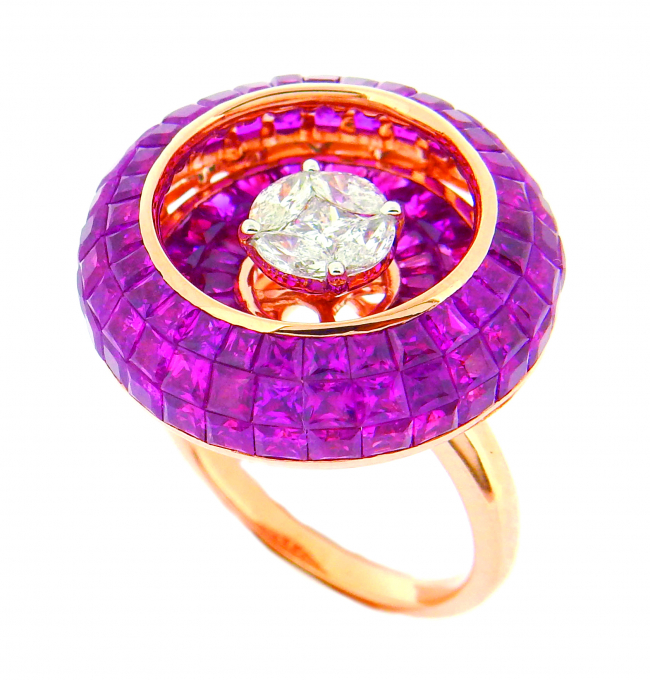
Jewelcraft is eyeing to expand its product inventory to include other types of raw materials to give the company more room to revolutionise designs and create exceptional jewellery pieces. Jewelcraft primarily uses rubies, sapphires, emeralds and diamonds in its collections.
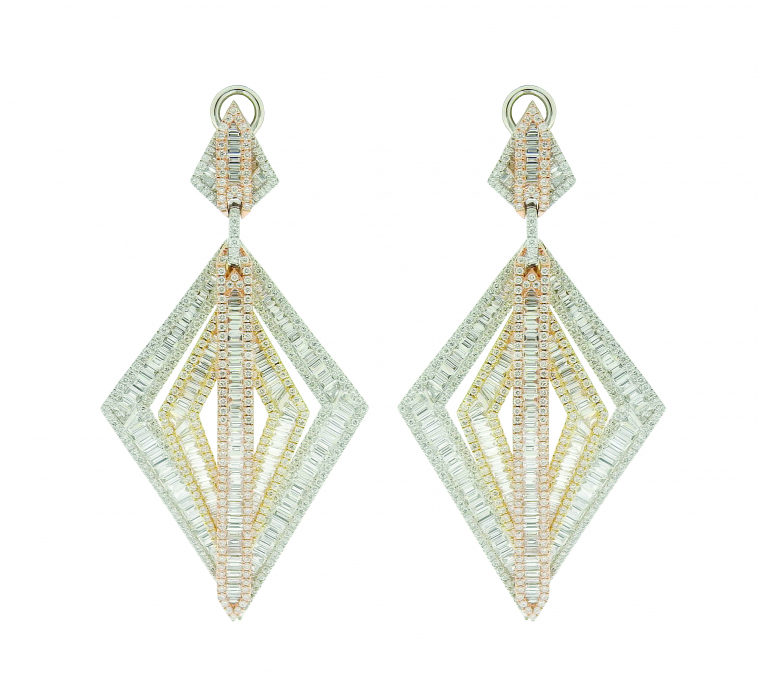
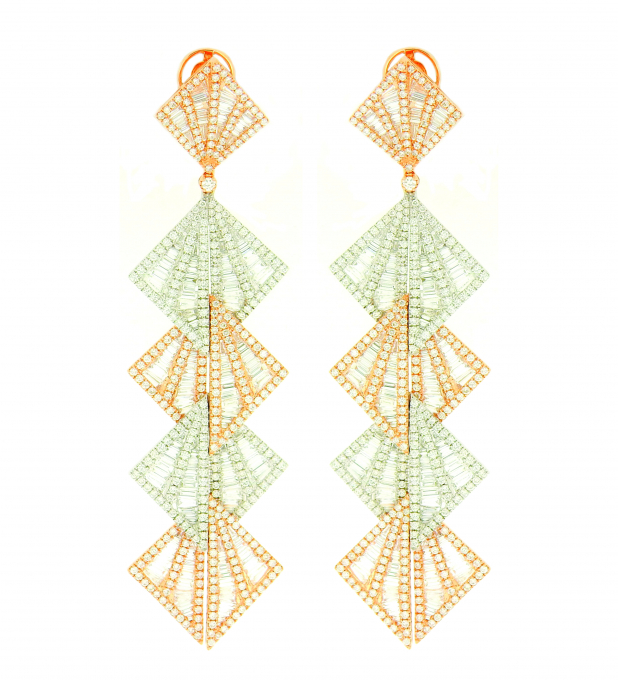
“We wish to incorporate fancy colour diamonds, higher-quality unheated rubies and sapphires, and other gems into our portfolio to be more in line with our vision to cater to the high-end jewellery market,” Parmani said. “Buyers are likely to favour geometric jewellery designs.”
Meanwhile, Pravin Patel of KAA Creations also observed the market’s growing fascination for never-before-seen design concepts. “Now is the best time to grow and innovate; start anew and reconnect with partners in the trade,” he said.
The company recently unveiled its twin diamond ring collection. Its most popular products are daily-wear rings and earrings.
Rings sell for about US$2,000 to US$3,000; bracelets for around US$10,000; earrings for US$4,000 to US$5,000; and necklaces for US$10,000 to US$15,000. All diamond jewellery pieces by KAA Creations are VS quality in 18-karat gold. The Thailand-based manufacturer mainly caters to the European and the Middle Eastern markets.
Patel said a number of online initiatives involving market engagement and product promotion, which the company started doing during the pandemic, will remain an important part of its business operations.
Aranya Lohakitthaworn of Sphere Jewelry Manufacturing Co Ltd echoed this sentiment, adding that social media platforms like Facebook are extremely useful in reaching out to buyers during and after the pandemic. Now that physical events are again taking place, digital initiatives are expected to complement offline strategies, he added.
Promising future
According to GIT’s Prasongpongchai, Thailand’s gemstone and jewellery exports are growing at a rapid pace. Citing industry forecasts, he said the trade is poised to expand by at least 20 per cent year on year.
The outlook remains positive as demand further intensifies, Jewelcraft’s Parmani said, adding that strong market interest in gemstones and jewellery is pushing prices up.
“The jewellery market could outpace the Gross Domestic Product growth of major markets such as Europe, the US and India,” he remarked. “Developments in other industries only fuelled the demand for luxury goods. This, combined with a shortage in fine goods, only increased the gap between demand and supply, and we do not see this trend going away anytime soon.”
Hindrances to growth also remain, including tighter supply of raw materials and soaring prices of diamonds and coloured gemstones. “This makes business more challenging as everyone needs time to digest new prices in the supply chain. Labour shortage is another problem post-lockdown. It seems that a large portion of the labour pool has permanently left the industry to pursue other fields,” added Parmani.