Transformation and resilience marked the year 2025 for the jewellery and gemstone business. In the face of continued challenges and shifting market dynamics, industry players are pointing to clear signs of recovery in key global markets.
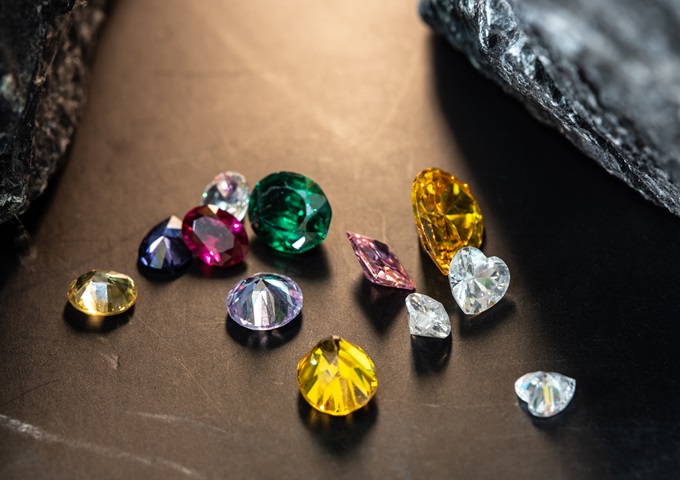
Some categories, including coloured gemstones, high-quality jewellery and lightweight gold pieces, are showing solid performance.
Evolving market
The coloured gemstone sector demonstrated a notable improvement in 2025, coming from a softer market, affected by political and economic instability across different parts of the world, according to Elena Basaglia, head of Partnerships and Product – Downstream at Gemfields.
Collectors and consumers increasingly opting for individuality alongside a growing preference for traceability and transparency are fuelling the gemstone business.
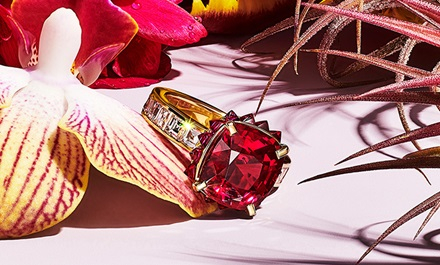
“This year, high jewellery maisons celebrated colours in many creative ways, showcasing bold artistic concepts and narratives with exceptional gemstones and craftsmanship in their collections,” added Basaglia.
The industry, however, also faced ongoing challenges such as tighter supply of high-quality fine gems with traceable provenance as well as rising mining costs. More importantly, the introduction of US tariffs on imported coloured gems poses a significant challenge for the industry – increasing costs, disrupting supply chains and putting pressure on exporters and retailers alike.
Hong Kong-based coloured gemstone and diamond dealer Dynamic International witnessed a turnaround in business towards the end of the year, particularly from the local market.
“Coloured gemstones did far better than diamonds for the second consecutive year. Hong Kong jewellery retailers gave us plenty of invoices in the last few months for both loose and mounted coloured gemstones. The fast movers this year include Paraiba tourmaline, Mahenge spinel, lagoon tourmaline and umbalite garnet,” said Director Rishabh Malpani.
He also noted heightened demand for coloured gemstones as a store of wealth this year. Given high gold prices, private clients have been investing in loose stones, whose value continually appreciates, rather than buying jewellery.
“We even turned some B2C customers into B2B partners by encouraging them to resell some of their purchases to their network of contacts. This strategy paid off handsomely for us,” Malpani shared.
The omnichannel approach likewise delivered strong results for Dynamic International. With an active Instagram account, the company has built a solid following of customers around the world, several of whom now make frequent and regular purchases.
For its part, Thai coloured gemstone specialist Blue Gems Co Ltd had a slow start to 2025, exacerbated by tariff-induced business disruptions.
According to Deputy Managing Director Sirikul Vuthipanyakom, customer confidence was severely hit by geopolitical tensions and market uncertainties.
“Clients mostly bought to fulfil specific orders and did not want to replenish stocks. Some of our former customers from China even asked us to buy back our stones or help them move their stock,” she revealed.
Purchases by Japan-based clients however grew significantly on the back of the country’s booming tourism industry.
Vuthipanyakom said rubies and sapphires of 1 to 2 carats with certificates were favoured by Japan-based jewellery manufacturers. Surprisingly enough, demand is driven by Chinese tourists to the country. “These visitors believe that jewellery made in Japan are of superior quality. Instead of buying in China, they would do so in Japan,” she explained.
The US market likewise improved in the latter part of the year, with medium- to high-quality rubies of 1 to 5 carats enjoying good sales, she added.
Changing preferences
Mayur Daga, marketing and sales manager of KGK Group China division, said jewellery remains an essential item for special occasions like weddings and birthdays despite macro uncertainties affecting consumer sentiment.
“Market demand is still there as well as consumers’ love for jewellery. However, they are now inclined to buy smaller sizes or less expensive pieces,” Daga explained.
Rubies, sapphires and emeralds are the top-performing gems in 2025, with smaller sizes of 30, 40 and 50 pointers moving the fastest, he added. Stones of 1 to 2 carats are still selling while those between 5 to 10 carats are harder to move.
Daga said consumer behaviour and market trends are evolving too. “Those who adapt to the change will win. It all comes down to the design at the end of the day. Companies that regularly update their designs are thriving. For instance, in China, designs that blend traditional cultural elements with coloured gems are highly sought after,” he explained.
KGK Group primarily serves major jewellery retailers, wholesalers, key opinion leaders (KOLs) and consumers in China.
The group is planning to launch new collections that feature ready-to-order sets of gemstone bracelets, aiming to streamline the buying process for clients. This initiative is designed to meet the growing demand for unique and high-quality designs.
Over in Taiwan, Cheng WanYi, chairman of Taiwan Jewelry Industry Association, said Taiwan’s jewellery sector is weathering one of its toughest cycles in decades due to global headwinds, high gold prices and shifting consumer demand.
“Jewellery is considered a luxury, not a necessity. In times of economic uncertainty, consumers naturally cut back on spending for luxury goods," Cheng explained. He pointed out that this shift has led to a decrease in middle-market spending, while demand remains polarised between high-end and affordable luxury pieces.
“High-end luxury jewellery may make up around 5 per cent of the market, with the remaining 95 per cent falling under the affordable luxury segment,” he added. "For affordable luxury items to succeed, they must be trendy and innovative to capture consumer interest. Jewellers must prioritise design and innovation to enhance the value of their products and stay competitive.”
He said it would take two to three years for consumers to fully adjust to high gold prices.
Lightweight and unique
Gold becoming more expensive prompted consumers to seek more affordable alternatives, resulting in a growing interest in lightweight gold jewellery.
Karen Wong, general manager of Afuhi Jewelry HK Ltd, said, “Given the sharp rise in gold prices, many customers are considering alternatives such as platinum or opting for 14- or 10-karat gold.”
Hong Kong-based Afuhi Jewellery is under the umbrella of Japanese fine jeweller Futago, which specialises in diamond jewellery, bridal collections and bespoke pieces. Futago's operations span retail outlets in Japan and Hong Kong as well as wholesale and exports to the US, Europe, Australia, Southeast Asia, Singapore, Taiwan and Japan.
Wong cited stable business in the Australian and US markets in 2025, thanks to existing clients. Demand for distinctive and top-quality jewellery pieces remains steady across all markets in 2025, a trend that she said will likely continue into 2026.
“With the convenience of social media nowadays, people can easily browse and compare products. When customers see similar designs from different brands, their focus tends to shift to pricing. However, by offering distinctive and top-notch pieces, and emphasising the value of design and service, we manage to drive business growth,” Wong remarked.
Meanwhile, Prateek Surana, president of Aarohi Co Ltd, said business in 2025 was “a little tough” due to high gold prices, which led to increased costs. However, gold prices can be a double-edged sword as they also drove demand for plain gold jewellery.
Specialising in fine diamond and coloured gemstone jewellery made in Japan, the company has been focusing on creating new designs in response to escalating gold prices and consumer demand for lightweight pieces.
Sidharth Agarwal, CEO of Kowloon Trading Co, which specialises in diamonds and fine jewellery, said the company has already surpassed last year’s turnover through a “low-margin, high-turnover” approach.
He focuses on deepening existing client relationships, targeting steady growth in the long run rather than aggressive expansion amid market uncertainties, adding that transparent cost breakdowns have strengthened client trust.
The US is Kowloon Trading’s main market alongside the Middle East and Southeast Asia. US clients mainly go for lab-grown diamonds while the Middle East are placing orders for diamonds and coloured gemstones.
Product demand varies by region, from lab-grown diamond jewellery in the US to classic, competitively priced designs in Southeast Asia and high-end gemstone and diamond pieces in the Middle East. “Customisation is the way to go,” Agarwal stressed, noting that a computer-aided design (CAD) team in China supports a 12-hour quotation target and two-week delivery for confirmed orders.
“After initial hesitation, we ventured into lab-grown diamond jewellery in the second half of the year as demand surged. I see lab-grown diamonds outperforming the natural diamond market in terms of growth over the next 50 years,” said Agarwal.
He also expects strong momentum in the coloured gemstone trade, with emerald, tourmaline and tanzanite leading the business and positioning the category as a key differentiator from competitors focused mainly on diamonds.
Jenifer Lam of Hong Kong-based jewellery retailer Rose Fine Jewellery, for her part, is banking on accessible fancy colour diamond jewellery to sustain steady growth in a challenging luxury market.
The brand primarily caters to Hong Kong and mainland Chinese customers, particularly targeting young professionals seeking “everyday wearable jewellery” and multi-functional pieces. Lam noted that high-quality pink diamond jewellery is extremely sought after, with best-selling pieces falling within the HK$5,000 to HK$30,000 (around US$385 to US$3,856) price range at retail.
“Customisation is gaining traction. Our clients can choose from loose stones to designs, enhancing the emotional significance of each piece,” said Lam.