While the global jewellery industry is adjusting to disruptions from the Middle East conflict, now in its third week, some markets remain severely impacted by the war’s far-reaching consequences.
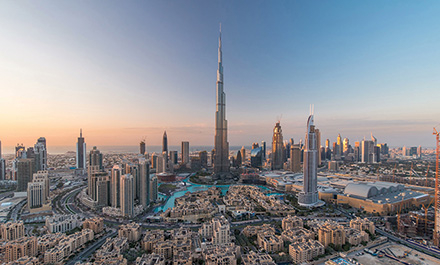
The Turkish jewellery industry is taking a direct hit from the war. The Gulf region is Türkiye’s primary market for jewellery exports, with shipments to the United Arab Emirates reaching US$2.7 billion in 2025.
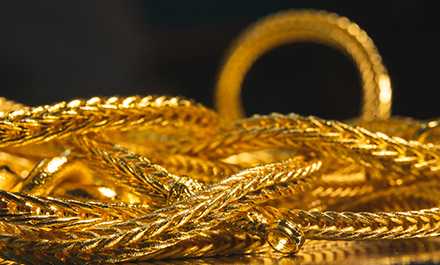
Moreover, Turkish jewellers are already reeling from even higher gold prices due to local duties, making their products less competitive in the international market, according to Jewellery Exporters' Association of Türkiye Manager Sirzat Akbulak. Turkish jewellers have thus been losing market share to Italian, Chinese, Thai and Indian competitors, he said.
“A prolonged war in the region will definitely hurt Turkish companies. The longer this drags on, the harder it will be for them to sustain business, given that Dubai is the biggest market for Turkish jewellery,” Akbulak continued.
The diamond trade is also navigating the broader implications of the US-Iran war.
World Federation of Diamond Bourses (WFDB) President Yoram Dvash noted in a recent WFDB communication that the ongoing conflict directly affects markets, international trade flows and consumer confidence worldwide.
He said, “Against this backdrop, two of the world’s key diamond centres – the Israel Diamond Exchange and the Dubai Diamond Exchange – continue to operate while their regions face heightened geopolitical strain. Their members remain active, sustaining trade and helping ensure continuity across the global diamond pipeline. This resilience reflects the professionalism, discipline and collective strength of our international diamond community.”
Ripple effects
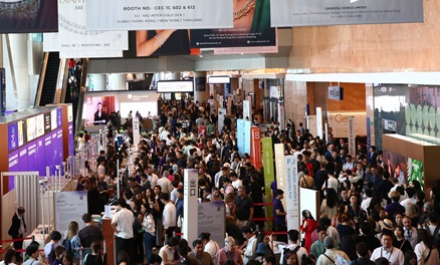
The absence of Middle East and, to a certain extent, European buyers at the March Hong Kong Fairs earlier this month also highlighted the immediate repercussions of the war on the jewellery trade.
Prior to the escalation of the conflict, the Middle East had emerged as a promising market for gem and jewellery suppliers around the world, with many citing the region as a key priority for expansion this year. The outbreak of the war left several companies either adopting a wait-and-see approach or pivoting to alternative markets.
Victor Yiu, past president of the Diamond Federation of Hong Kong, China and director of Zuri Jewelry Co Ltd, said companies continued to communicate with Middle East clients and partners through digital means such as WhatsApp. “This has allowed businesses to maintain relationships despite the challenges,” he added.
Southeast Asia’s gem and jewellery trade is unlikely to be directly hindered by the conflict since the region’s primary markets are the US, Europe and Asia, according to Suttipong Damrongsakul, president of the ASEAN Gems and Jewellery Trade Association (AGJA).
“The Middle East is a high-potential market for Southeast Asia’s gem and jewellery industry, driven by strong demand for luxury goods. While not yet a primary export destination, it is an important market for future expansion,” he remarked.
The war may however yield indirect effects, particularly in terms of logistics, rising transportation costs, and market uncertainty, which could influence overall trade dynamics, Damrongsakul continued. Related sectors such as manufacturing and electronics may also experience some disruptions, which could in turn further influence supply chains and consumer demand.
Decha Nuntana, deputy managing director for Marketing of Thailand-based Pranda Jewelry, pointed to the detrimental impact of geopolitical tensions on market sentiment.
Unlike reciprocal US tariffs and high precious metal prices that companies can adapt their operations to, the current hostilities – especially if protracted – leave businesses with few, if any, alternative measures to mitigate their impact. “The attendant effects such as skyrocketing oil prices and overall uncertainty will negatively affect demand for jewellery consumption,” he shared.
Pranda is present in the Middle East through its 24-karat gold jewellery brand Prima Gold, which has stores in Dubai and Oman. These are currently closed due to safety reasons amid the ongoing conflict.
“We had plans to expand our OEM and OBM business in the Middle East, which we had identified as our next big market. Those plans, of course, have since been shelved,” said Nuntana. "At this point, we are adopting a conservative outlook for the year, with the objective of sustaining business amid unfolding challenges."