Diamond traders are generally optimistic about a recovery in the diamond industry, with bigger, higher-value stones enjoying steady demand amid tighter supply.
According to industry players, buyers are becoming more discerning, favouring fewer purchases but opting for top-tier stones. For instance, diamonds of 2 carats and above continue to attract buyers' attention.
Mukesh Dholakiya, director of HK Impex Pvt Ltd, said prices in the 2-carat and up product range also remain stable. “There is likely a shortage of goods too so hopefully, we will see an improvement in pricing,” he added.
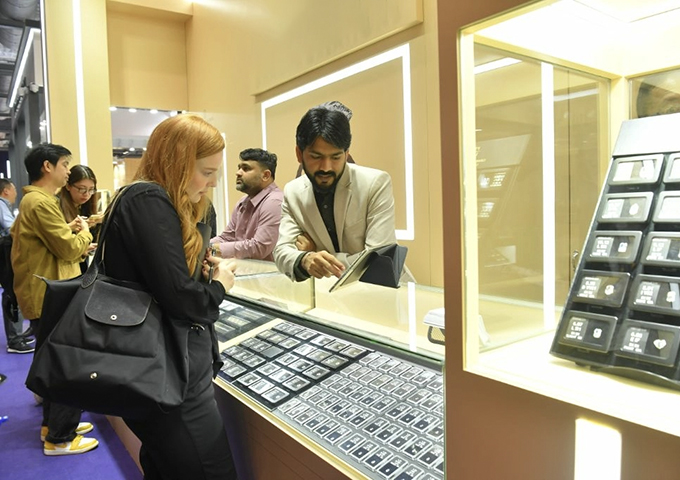
Layouts alongside fancy cut diamonds are also moving fast while smaller sizes, rounds in particular, have become more difficult to sell. Dholakiya said his company entertained buyers from Australia and Europe as well as Asia at the ongoing Hong Kong International Diamond, Gem & Pearl Show.
Rishi Mundra, director of Stellar Group HK Ltd, agreed, adding that the market for diamonds of 2 carats and up, and even 5 carats, has strengthened because of supply constraints.
“Those buying 2-, 3-, 4- or 5-carat diamonds would still prefer natural diamonds, which is a healthy sign,” he explained. “For smaller sizes of 20 points and below, whether rounds or fancy shape, business is also stable. Meanwhile, 30 pointers to 1 carat continue to see price challenges.”
Mundra also said the local market in Hong Kong has slowed down compared to previous years largely due to disruptive US tariffs and competition from other jewellery manufacturing hubs. As such, the company is focusing on other markets such as Europe and North America.
Rebound
Sean Lin, vice president – Sales at De Beers Group, said signs of recovery are emerging in the Chinese market, while trading activity in India and the US points to further momentum.
“We see some stabilisation in China, especially for the 1-carat and up category,” he noted. “Retailers are starting to sell more – not the same as pre-COVID levels – but recovery is quite obvious in the 1-carat size and up.”
India, meanwhile, continues to be an engine of growth for the industry, supported by an expanding middle-class market. Customers are also upgrading their diamond purchases and gravitating towards bigger, better-quality goods.
In the US, larger, higher-value diamonds are moving well while lower-value items, which used to attract middle-class buyers, are facing difficulties.
A great deal of independent stores in the US is also leaning more towards natural diamonds as the distinction between natural and lab-grown diamonds is increasingly becoming more well-defined, added Lin.
For his part, Shreyans Dholakia, brand custodian at Shree Ramkrishna Exports Pvt Ltd, said optimism persists within the natural diamond industry as new sources of wealth emerge – particularly among tech entrepreneurs and a growing base of affluent investors.
With more high-net-worth individuals than just a few years ago, spending on natural assets is expected to rise steadily.
Looking ahead, diamonds are increasingly viewed not only as luxury adornments but also as tangible stores of value. “Diamonds are physical assets that come with a very unique product proposition, which distinguishes them from other investment products,” noted Dholakia.
With prices nearing their lowest point, confidence is building that the natural diamond market will strengthen in the coming years, he added.
Click here for more stories from JNA's March Show Daily 2026