Jewellery buyers’ growing penchant for novelty is paving the way for unconventional colours. Among these are grey gemstones that are gradually albeit steadily making their way into mainstream jewellery design and production.
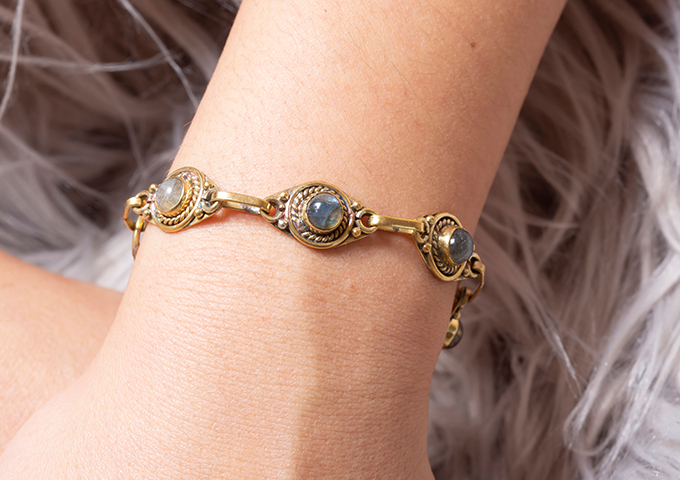
Grey diamonds are particularly favoured, often appearing as accents or focal stones in more innovative collections. Meanwhile, grey varieties of sapphire, spinel, chalcedony, labradorite, moonstone and even Akoya pearl, are also rising in popularity as hero or side stones.
Beloved for their subdued elegance and quiet strength, grey gems are answering the market’s call for non-traditional colours that could rival more established gems in sophistication, rarity and connotation.
Colours vary from lightly toned and saturated to the darker, more intense charcoal greys. Some, like the grey star sapphire, offer even more distinction, thanks to the gem’s naturally occurring six-ray star effect or asterism that appears to hover above its smooth surface.
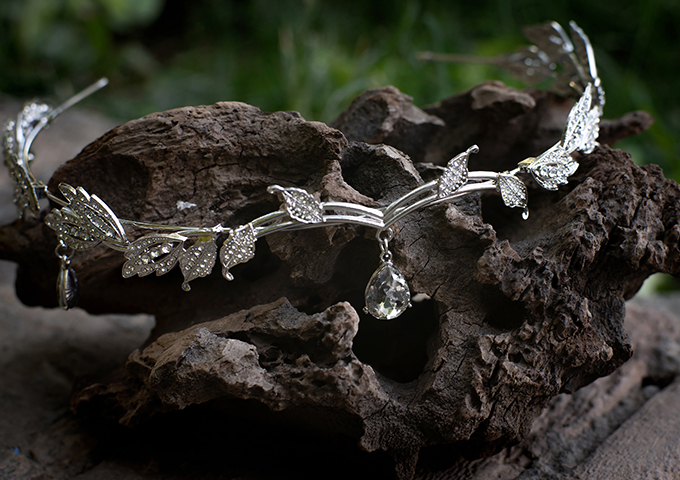
Not dull at all
Natural grey diamonds obtain their unique colour from inclusions, specifically hydrogen, and in some instances, boron. Diamond specialist Leibish said grey diamonds are mined in India, Russia, Brazil, South Africa and Australia – home to the decommissioned Argyle mine. Grey diamonds accounted for 2 per cent of colour diamonds then produced by Argyle, which is renowned for pink diamonds, according to Leibish.
William Gant, managing director, Australia of LJ West Diamonds Inc, said jewellery manufacturers and designers are taking notice of grey diamonds and using them more frequently as complementary stones.
LJ West, headquartered in the US, specialises in natural fancy colour diamonds. According to Gant, the market has increasingly been opting for non-conventional colours such as grey diamonds. Historically, grey diamonds were not seen as particularly valuable, but these have risen in popularity over time.
“The advantage of grey diamonds is that the grey colour – while not so interesting on its own – brings out the beauty and colour of other gems when they are placed side by side. It is a force multiplier,” shared Gant.
A wide variety of coloured gemstones likewise come in grey colour, in varying intensities. According to Temur Ansari, director of Noor Gems HK Ltd, grey gems are gaining popularity due to their unique and elegant appeal and versatility. They are also viewed as modern alternatives to more traditional gemstones.
“They are increasingly seen as a sophisticated choice in fine jewellery, with designers appreciating their subtle beauty and ability to complement various styles,” explained Ansari.
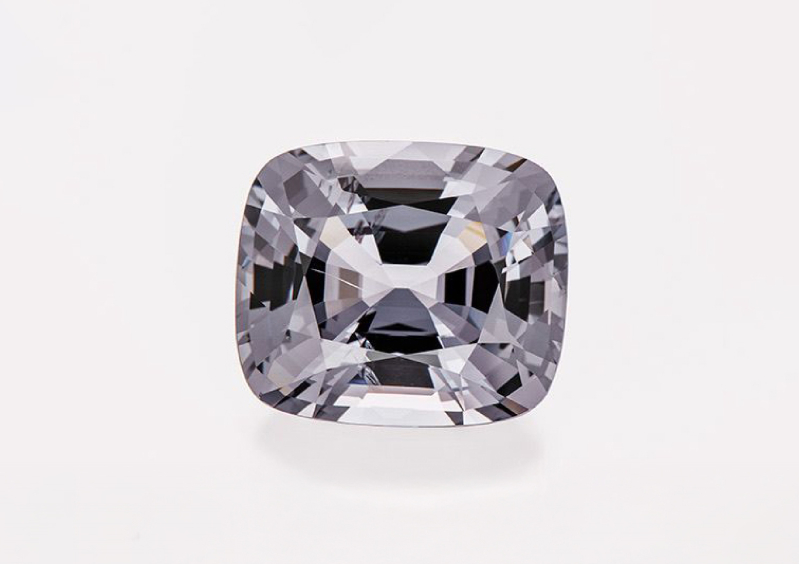
Noor Gems specialises in a broad range of coloured gems, led by spinel, tourmaline and garnet. Of these, grey spinel, specifically those exhibiting perfectly neutral grey tones, is enjoying solid market demand. Majority of grey spinel stones in the market show a minor blue or violet secondary colour component.
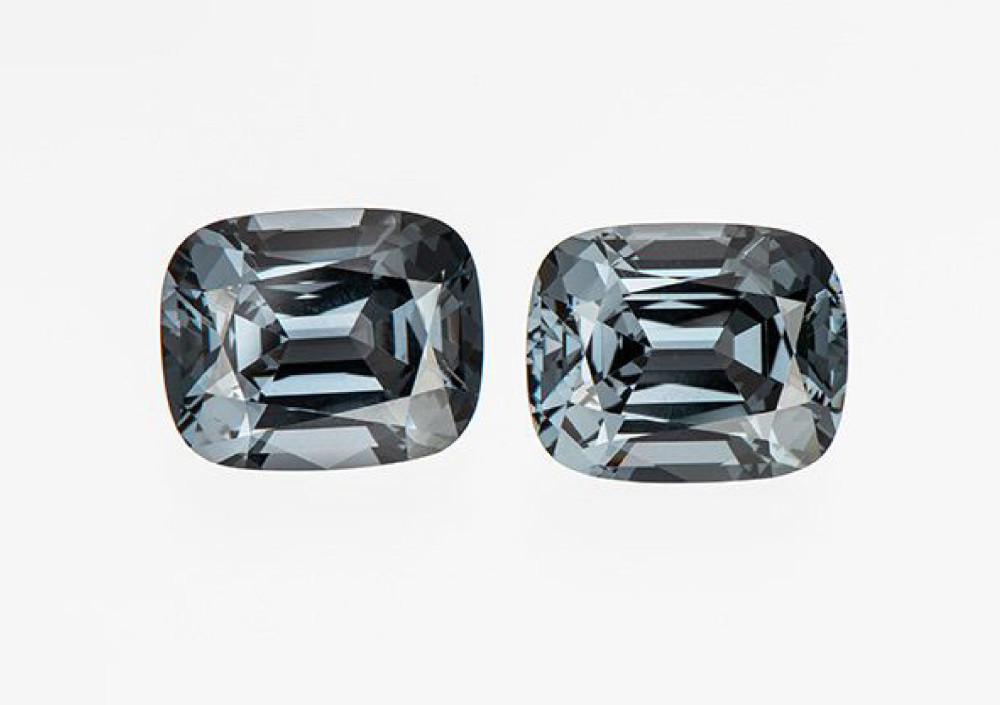
Grey spinel from Noor Gems
Ansari said grey spinel goes well with fine jewellery in white gold and platinum. Value-wise, grey spinel also commands a higher price at US$500 up to US$6,000 per carat when compared to other grey gems. Noor Gems has a few grey garnets in its inventory, but these come in bigger sizes of 50 to 60 carats and a price tag of around US$2,000 per carat. Grey tourmaline sells for US$100 to US$300 per carat.
“The allure of grey gems lies in their ability to combine the best of both worlds: The subtle, sophisticated hues and brilliance of a high-quality gemstone with the durability and relative affordability that make them accessible to a wide range of jewellery enthusiasts,” shared Ansari.
Steady demand
Manit Narula, co-founder of Bangkok-based Carat & Grams Co Ltd, named Europeans and Australians as his buyers of grey gemstones.
“Grey gems are a stable product, but there was more interest a few years ago as demand has somehow softened,” he commented. “These gems are unique and there are no other stones that are quite like them. Bigger sizes of around 8 to 10 carats are becoming harder to come by.”
The company offers Burmese grey spinel. According to Narula, grey spinel with a more open colour or a more silver tone tends to be more expensive but more greyish stones also have a following. By comparison, grey spinel from Tanzania exhibits a bluish or purplish tone.
“It depends on buyer preference,” he added. “Moving forward, buyers will continue to ask for grey spinel as there is no substitute to it. Bluish grey spinel is also quite strong.”
Grey is also a highly sought after pearl colour, according to Hisamine Kobayashi of Japan-based Mine Pearl. Apart from China, grey Akoya pearls are getting attention from buyers in the US, Europe and Asia.
Grey star sapphires, meanwhile, are also gaining ground, with buyers drawn to their affordability and exceptionality, remarked Ahzar Zawahir, CEO and partner at Beauty Gems.
The naturally occurring asterism is more pronounced in a grey star sapphire, making it a striking centre stone in a jewellery piece. “This star-like shape comes out stronger against a grey surface as opposed to other colours. And this is also budget-friendly compared to blue star sapphires,” explained Zawahir.
Vietnam is a strong market for grey star sapphires, which are best set as rings or dangling earrings, added Zawahir.