Industry players remain cautiously optimistic about growth prospects amid a confluence of macroeconomic and geopolitical uncertainties threatening to upend gains in the jewellery trade.
This article first appeared in the JNA November/December 2023 issue.
Optimism was rife at the start of 2023, coming from post-pandemic highs achieved in 2022. The year’s bright spots included improving consumption sentiment, sustained investments in technology, industry-backed initiatives to help stabilise demand and supply as well as innovative branding and marketing strategies.
Top of mind was China’s decision to reopen its borders in early February 2023 after nearly three years of strict Covid-induced lockdowns. Some viewed the move as a game-changer.
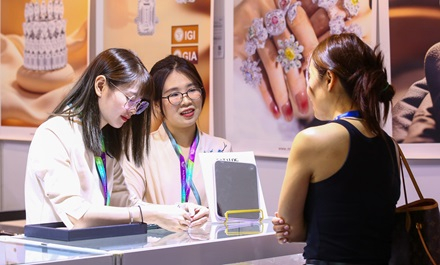
Hong Kong – a critical regional jewellery and gemstone hub – was once again hosting major sourcing events, signalling the much-awaited revival of global business. In-person interactions were back, and jewellery manufacturers and diamond and gemstone dealers started entertaining multiple orders from top markets such as the US, Europe and China.
High-end jewellers likewise saw robust results, with luxury conglomerates Kering, LVMH and Richemont reporting steady growth in sales.
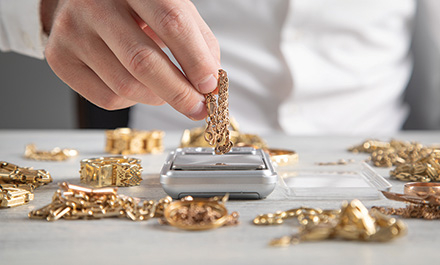
According to the World Gold Council (WGC), pent-up demand alongside celebratory post-pandemic shopping fuelled strong sales of gold jewellery in China in the first quarter of 2023. Chinese gold jewellery demand was up 11 per cent year on year to 198 tonnes, accounting for 41 per cent of total Q1 consumption. This was also the highest Q1 performance for Chinese jewellery demand since 2015.
Growth continued in the second half of the year, albeit at a slower pace. Overall gold jewellery demand showed a moderate 3 per cent increase, with China seeing a 28 per cent uptick in demand to 132.2t.
However, higher fabrication volumes resulted in inventory ballooning to 15t in Q2, which WGC attributed to Chinese demand falling short of manufacturers’ expectations.
By end-June 2023, industry players were pointing to soaring prices of gold and raw materials as potential growth deterrents, on top of other headwinds: The ongoing war in Ukraine, rising US interest rates and inflation, and a gradual slowdown in major economies, including that of China. Economists expect China to miss its growth target of around 5 per cent in 2023 due to a protracted property crisis, export woes and dwindling consumer sentiment.
“The world expected demand to pick up significantly when China reopened,” said Lawrence Ma, founding president of the Diamond Federation of Hong Kong, China and CEO of Lee Heng Diamond Group. “But demand did not reach the level that we anticipated. There were a few unpleasant surprises in 2023 – inflation, higher interest rates and now the war in Israel, to name a few.”
Hope for diamonds
A “challenging” 2023 came at the heels of rapid and strong post-pandemic recovery in consumer demand, according to Feriel Zerouki, president of the World Diamond Council (WDC) and senior vice president of Corporate Affairs at De Beers Group. Macroeconomic uncertainties dampened consumer appetite for diamond jewellery, she added.
“The pressure was amplified in wholesale markets because of midstream inventory levels and the supply chain ripple effect,” noted Zerouki.
Sabyasachi Ray, executive director of India’s Gem & Jewellery Export Promotion Council (GJEPC), agreed, adding that demand from the US weakened due to economic upheavals. Additionally, a post-Covid rebound in Chinese consumption is yet to materialise.
“China is grappling with its own economic challenges, affecting jewellery demand. This also led to a 25 per cent decline in India’s gem and jewellery exports to date,” revealed Ray.
Echoing Ma’s sentiments, Sidharth Agarwal, director of major diamond dealer Kowloon Trading Co, said further instability can be expected throughout 2023. In fact, demand has dropped so much that it was almost on a par with Covid-19 levels as of October.
“September to December is supposed to be a peak buying season in the jewellery trade due to Thanksgiving, Christmas and other festivities, but we are not getting the usual number of orders,” noted Agarwal. “There is little optimism as we navigate the second half of 2023.”
Buyers are also playing safe due to price uncertainties, opting to limit their diamond purchases to just meet specific orders. This was a stark difference from the first two quarters of the year when Kowloon Trading Co’s clients would buy in bulk in anticipation of increased orders.
Meanwhile, customers could buy on the dip as prices are down, especially for smaller-sized loose diamonds of VVS and VS clarity grades. Even SI goods are also seeing a drop in prices although not as steep as those for better-quality stones, according to Agarwal.
“You can say it is a good time to buy, but there is also so much uncertainty in the market. Nobody knows where the bottom line is,” he continued.
Hope may be on the horizon though. Both Agarwal and Ma of DFHK are counting on recent industry initiatives to help stabilise the diamond market: India’s voluntary two-month moratorium on rough diamond imports until December 15, 2023; and De Beers’ reported decision to allow its Sightholders to postpone diamond purchases to early next year.
“Inventory in the pipeline, especially in the manufacturing and wholesale level, remains quite high. Restricting rough purchases over the next two to three months could lessen inventory buildup in the midstream,” explained Ma.
Solid demand for gems
Damien Cody, president of the International Colored Gemstone Association (ICA), cited robust market demand for coloured gemstones at international trade shows in 2023.
“Gem and jewellery trade fairs recommenced around the globe and were very successful as traders scramble to once again meet customers face to face,” noted Cody. “Meanwhile, higher prices of goods have slowed trading as there is uncertainty as to where prices will eventually settle.”
Temur Ansari of Noor Gems said prices of premium gems such as Paraiba tourmalines have risen by as much as 50 per cent to 100 per cent. Supply is also tight as buyers continue to actively seek these top-quality gems, he added.
“We offer rare Paraiba tourmalines from Brazil and Mozambique. We also sell Kashmir sapphires and alexandrite, to name a few. All these are enjoying solid market demand,” he shared.
The three major shows in Hong Kong were a highlight in Noor Gems’ 2023 as these enabled it to tap international buyers, specifically from the US, Europe and the United Arab Emirates. Ansari however said companies are adopting a wait-and-see position due to continued uncertainties.
Cody remarked that majority of retail markets in advanced economies enjoyed strong consumer demand during the pandemic. In recent months, however, the market has become apprehensive of rising inflation and interest rates. He said, “We are seeing solid demand and high prices at the top end of the market as evidenced by auction results and reported sales.”
Sean Gilbertson, CEO of miner Gemfields, also attested to a healthy coloured gemstone market in 2023. He noted, “We saw some numbers in our auctions that were quite frankly almost ‘rubbing the eyes’ worthy. Prices remain robust and strong in 2023. The market is very clearly healthy by all accounts albeit down notably from the irrational exuberance that we saw in 2022, so 2023 is pausing for a little bit of a breather.”
Dazzling jewellery
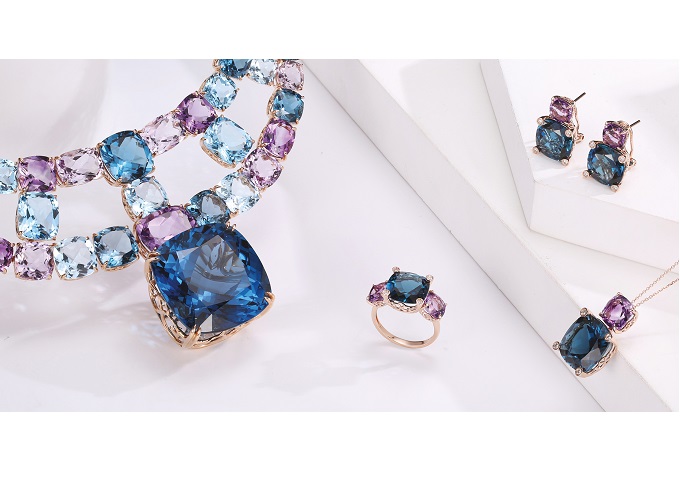
The high-end jewellery market is likewise experiencing pressure from external factors such as geopolitical tensions and high interest rates, according to Louis Cheung, chairman of Hong Kong Jewellery & Jade Manufacturers Association (HKJJA) and managing director of Edelweiss Jewellery Co Ltd.
“Gold assets are now king as high-end jewellery sales have rapidly declined during the past three months,” he noted. “Volatility in China’s property market also stifled Chinese consumers’ appetite for luxury goods.”
Türkiye, a top exporter of gold jewellery and jewellery mountings, also reported a sluggish 2023 mainly due to high gold prices. Sirzat Akbulak, manager of Jewellery Exporters’ Association of Türkiye, said Turkish jewellers performed exceptionally well in 2022, owing to a post-pandemic surge in business.
“As Turkish companies primarily specialise in fine gold jewellery, any fluctuations in gold prices and related instabilities have a negative impact on our industry,” explained Akbulak. “The global economy has yet to fully recover as high inflation rates persist around the world. Business prospects stand to improve should inflation drop and investments increase.”
Fai Po Gem & Jewellery Ltd, for its part, is pointing to a rosy 2023, having witnessed a steady and positive business performance and sustained growth in wholesale exports throughout the year. Its primary clientele hails from the US, Europe and Southeast Asia.
Jacky Chan, founder and CEO of Fai Po, said the company offers top-grade products and customer services and regularly upgrades designs in line with current trends to drive business growth.
“In recent years, stacking became popular across different jewellery types like rings, necklaces and bracelets. While cuff earrings were a hit two years ago, unilateral earrings are all the rage now as asymmetrical styles are favoured by fashion-forward buyers,” disclosed Chan.
Dangling earrings and classic designs featuring recurring nature-inspired elements are also trendy. Diamonds, meanwhile, have consistently held their position as the most sought-after product category. Pearls also witnessed a remarkable performance in 2023 while lab-grown diamonds are gaining traction as more affordable options for consumers, added Chan.
Onwards to 2024
The industry can adopt a more upbeat outlook in the coming six months, specifically from Q4 2023 to Q1 2024, as demand for diamonds is likely to recover, remarked Ma of DFHK. For now, industry players should focus on cost, inventory and expense management, and increased marketing to promote natural diamonds.
“We all remain cautiously positive. The trade is prepared for one or two more quarters of slower demand but eventually, we will see a revival of China’s economy, backed by government-led initiatives to spur economic activity,”
he noted.
Zerouki of WDC agreed, adding that the diamond industry has always been cyclical. She said, “With strong underlying consumer desire for natural diamonds and a track record of diamonds rebounding strongly in the wake of challenging economic times, we can look forward to brighter times ahead once we navigate through the current period – and with our responsible approach to supply coupled with our investments in growing demand, we are taking the right steps to position ourselves for the upturn.”
Meanwhile, technology and design customisation are keys to sustainable growth and longevity in the trade, according to Agarwal of Kowloon Trading Co. Asia could be the next big market for jewellery and companies should focus on strengthening their business in the region,
he added.
Collective industry efforts to rebuild consumer confidence through curated marketing campaigns could help bolster diamond jewellery sales, according to Simon Hui, director, Raw Material, Diamond Management Centre at Chow Tai Fook Jewellery Group.
“At the end of the day, emotional connection is the most important selling factor. Powerful storytelling and education are integral to the future success of our industry. We should focus on this to restore consumer confidence,” said Hui.
Cheung of HKJJA, for his part, said companies should leverage new technology and techniques to advance their product offerings and adopt innovative marketing strategies to boost competitiveness in the market and achieve sustainable growth.